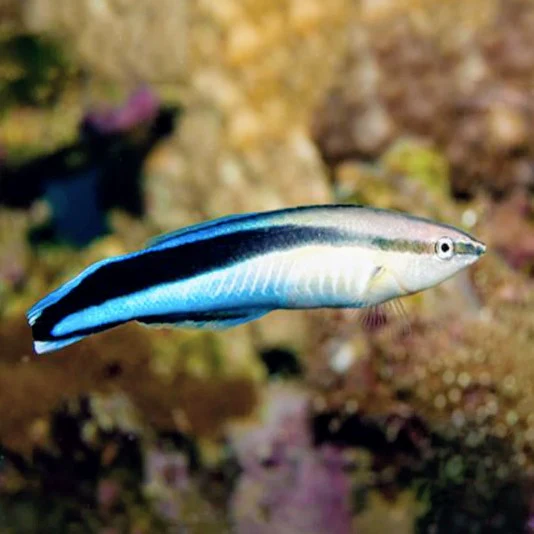
Yellowtail Tubelip Wrasse - Diproctacanthus Xanthurus
Yellowtail Tubelip Wrasse (Labropsis xanthura)
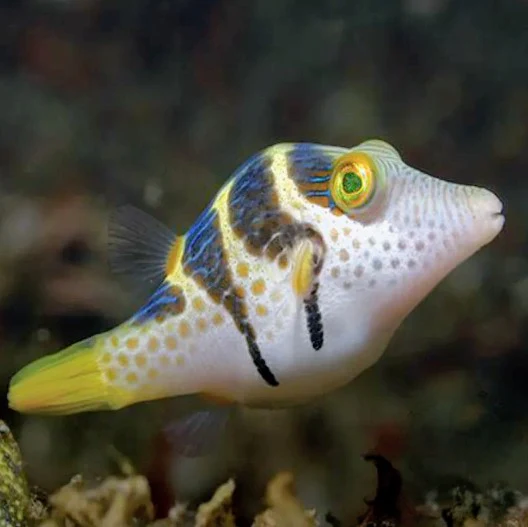
The Yellowtail Tubelip Wrasse, Labropsis xanthura, is a specialist coral-reef wrasse with a slender black-and-white striped body, thick fleshy lips and a bright yellow tail. Still commonly traded under the older name Diproctacanthus xanthurus, this Western Pacific species is unusual because juveniles may act as cleaner fish, while adults become coral-polyp feeders. Although attractive and peaceful in behaviour, it is not a general reef-community wrasse and should only be considered by expert marine keepers who understand its highly specialised diet.
Common Name:
Yellowtail Tubelip Wrasse, Yellowtail Tubelip, Yellow-tail Wrasse, Yellowtail Wrasse, Cleaner Wrasse, Wandering Cleaner Wrasse. Former trade name: Diproctacanthus xanthurus.
Scientific Name (Latin):
Labropsis xanthura
Often still listed in the trade as Diproctacanthus xanthurus.
Maximum Size:
Up to around 10 cm.
Water Type:
Marine
Origin / Natural Habitat:
Western Central Pacific, including Indonesia, the Philippines, Palau, New Guinea, the Great Barrier Reef and nearby northern Australian reef regions. Naturally found in coral-rich areas of shallow protected lagoons and sheltered seaward reefs, often at depths of around 3–25 m, where juveniles interact with other reef fish and adults forage on live coral polyps.
Water Parameters:
Temperature: 24–28°C
pH Range: 8.1–8.4
Hardness or Salinity: SG 1.020–1.025
Temperament:
Generally peaceful but highly specialist. It is not usually aggressive towards unrelated fish, but may be timid, difficult to settle and easily outcompeted by boisterous tank mates. Its main challenge is not temperament, but its natural dietary shift from juvenile cleaning behaviour to adult coral feeding.
Diet:
Specialist corallivore as an adult. Juveniles may remove ectoparasites from other fish, but adult Yellowtail Tubelip Wrasses feed mainly on live coral polyps. In aquariums, this makes long-term care extremely difficult. Some individuals may investigate very small meaty foods such as copepods, cyclops, enriched brineshrimp, finely chopped mysis or specialist frozen preparations, but prepared-food acceptance should not be assumed.
Minimum Tank Size:
A minimum of 300 litres is recommended for a single specimen, with larger, mature specialist systems preferred. The aquarium should be stable, oxygen-rich and structured with plenty of rockwork, caves and sheltered areas, but this species’ diet makes it unsuitable for most standard home aquariums.
Behaviour & Activity:
A slender, active wrasse that moves around coral structure, rockwork and reef surfaces searching for food. Juveniles may behave as cleaners for small territorial reef fish, while adults spend more time feeding on coral polyps. It may hide in crevices or sheltered areas when stressed, and newly introduced specimens can be shy or reluctant to feed. A secure lid is recommended, as wrasses may jump when startled.
Reef Safe:
Not Reef Safe
This species is not suitable for coral display aquariums. Adults naturally feed on coral polyps and may damage SPS, LPS, zoanthids and other sessile reef life. It is also not a reliable pest-control or cleaner fish for aquariums, as juvenile cleaning behaviour does not represent the adult diet.
Special Requirements or Care Notes:
Expert-only species due to its specialised coral-polyp diet and poor suitability for conventional aquarium feeding. Do not purchase as a substitute for cleaner wrasses or as a standard reef-safe wrasse. Long-term care may require a specialist system where coral feeding is planned and accepted. Avoid aggressive or fast-feeding tank mates, and do not rely on conversion to prepared foods. Best reserved for expert aquarists, public-aquarium-style systems or specialist research-style displays.
Suitable for:
Expert only
Availability:
Rare or occasional in trade
All images are a visual representation of the fish you will receive, made to be as accurate as possible. Please note that Mother Nature is a wonderful thing, and variation in patterns and colours will occur — that is part of the unique beauty of these animals.
Original: $21.46
-65%$21.46
$7.51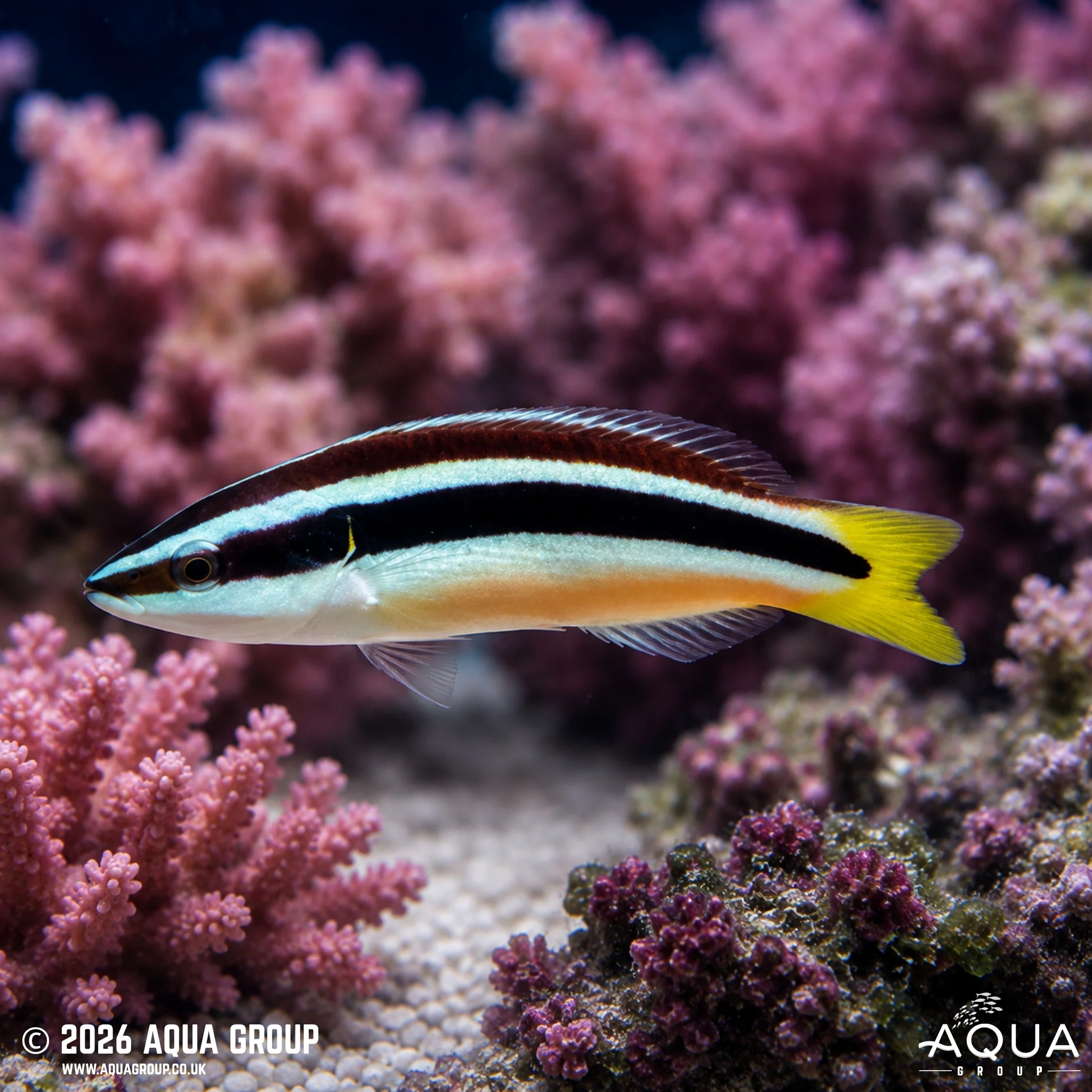
Description
Yellowtail Tubelip Wrasse (Labropsis xanthura)
The Yellowtail Tubelip Wrasse, Labropsis xanthura, is a specialist coral-reef wrasse with a slender black-and-white striped body, thick fleshy lips and a bright yellow tail. Still commonly traded under the older name Diproctacanthus xanthurus, this Western Pacific species is unusual because juveniles may act as cleaner fish, while adults become coral-polyp feeders. Although attractive and peaceful in behaviour, it is not a general reef-community wrasse and should only be considered by expert marine keepers who understand its highly specialised diet.
Common Name:
Yellowtail Tubelip Wrasse, Yellowtail Tubelip, Yellow-tail Wrasse, Yellowtail Wrasse, Cleaner Wrasse, Wandering Cleaner Wrasse. Former trade name: Diproctacanthus xanthurus.
Scientific Name (Latin):
Labropsis xanthura
Often still listed in the trade as Diproctacanthus xanthurus.
Maximum Size:
Up to around 10 cm.
Water Type:
Marine
Origin / Natural Habitat:
Western Central Pacific, including Indonesia, the Philippines, Palau, New Guinea, the Great Barrier Reef and nearby northern Australian reef regions. Naturally found in coral-rich areas of shallow protected lagoons and sheltered seaward reefs, often at depths of around 3–25 m, where juveniles interact with other reef fish and adults forage on live coral polyps.
Water Parameters:
Temperature: 24–28°C
pH Range: 8.1–8.4
Hardness or Salinity: SG 1.020–1.025
Temperament:
Generally peaceful but highly specialist. It is not usually aggressive towards unrelated fish, but may be timid, difficult to settle and easily outcompeted by boisterous tank mates. Its main challenge is not temperament, but its natural dietary shift from juvenile cleaning behaviour to adult coral feeding.
Diet:
Specialist corallivore as an adult. Juveniles may remove ectoparasites from other fish, but adult Yellowtail Tubelip Wrasses feed mainly on live coral polyps. In aquariums, this makes long-term care extremely difficult. Some individuals may investigate very small meaty foods such as copepods, cyclops, enriched brineshrimp, finely chopped mysis or specialist frozen preparations, but prepared-food acceptance should not be assumed.
Minimum Tank Size:
A minimum of 300 litres is recommended for a single specimen, with larger, mature specialist systems preferred. The aquarium should be stable, oxygen-rich and structured with plenty of rockwork, caves and sheltered areas, but this species’ diet makes it unsuitable for most standard home aquariums.
Behaviour & Activity:
A slender, active wrasse that moves around coral structure, rockwork and reef surfaces searching for food. Juveniles may behave as cleaners for small territorial reef fish, while adults spend more time feeding on coral polyps. It may hide in crevices or sheltered areas when stressed, and newly introduced specimens can be shy or reluctant to feed. A secure lid is recommended, as wrasses may jump when startled.
Reef Safe:
Not Reef Safe
This species is not suitable for coral display aquariums. Adults naturally feed on coral polyps and may damage SPS, LPS, zoanthids and other sessile reef life. It is also not a reliable pest-control or cleaner fish for aquariums, as juvenile cleaning behaviour does not represent the adult diet.
Special Requirements or Care Notes:
Expert-only species due to its specialised coral-polyp diet and poor suitability for conventional aquarium feeding. Do not purchase as a substitute for cleaner wrasses or as a standard reef-safe wrasse. Long-term care may require a specialist system where coral feeding is planned and accepted. Avoid aggressive or fast-feeding tank mates, and do not rely on conversion to prepared foods. Best reserved for expert aquarists, public-aquarium-style systems or specialist research-style displays.
Suitable for:
Expert only
Availability:
Rare or occasional in trade
All images are a visual representation of the fish you will receive, made to be as accurate as possible. Please note that Mother Nature is a wonderful thing, and variation in patterns and colours will occur — that is part of the unique beauty of these animals.