Fox Face - Siganus Vulpinus
Foxface Rabbitfish (Siganus vulpinus)
The Foxface Rabbitfish, Siganus vulpinus, is a bold and useful marine algae-grazing fish with a bright yellow body, white face, black facial mask and distinctive fox-like profile. Also known as the Foxface, Common Foxface or Black-face Rabbitfish, this Western Pacific species is popular in larger marine aquariums for its hardy nature, striking colour and strong appetite for nuisance algae. It is generally peaceful, reef-safe with caution and well suited to mature aquariums with plenty of swimming space, established rockwork and a regular vegetable-based diet.
Common Name:
Foxface Rabbitfish, Foxface, Common Foxface, Black-face Rabbitfish, Fox Face, Badger Fish.
Scientific Name (Latin):
Siganus vulpinus
Maximum Size:
Up to around 25 cm in the wild. Aquarium specimens are often around 20–25 cm, so this species should be planned for as a large, active rabbitfish.
Water Type:
Marine
Origin / Natural Habitat:
Western Pacific, including the Philippines, Indonesia, New Guinea, the Great Barrier Reef, New Caledonia, the Caroline Islands, Marshall Islands and nearby island regions. Naturally found on coral-rich reefs, lagoons, reef slopes and areas with branching coral and algae growth, usually in shallow to moderate depths. Adults are often seen singly or in pairs, while juveniles may occur in groups.
Water Parameters:
Temperature: 24–27°C
pH Range: 8.1–8.4
Hardness or Salinity: SG 1.020–1.025
Temperament:
Generally peaceful, but confident and capable of defending itself. It is usually compatible with many community marine fish, provided the aquarium is large enough. It may be territorial towards other rabbitfish or very similar species, and it should not be housed with fish likely to harass it, as stressed foxfaces can darken, hide or display their venomous spines.
Diet:
Primarily herbivorous to omnivorous. In the wild, it grazes algae and also takes some small planktonic or invertebrate foods. In the aquarium, provide a vegetable-rich diet including marine algae sheets, nori, spirulina flakes, herbivore pellets, algae-based frozen foods and regular grazing opportunities on live rock. Supplement with small amounts of mysis, brineshrimp, chopped clam or mixed marine frozen foods. Frequent algae-based feeding helps maintain health and reduces the chance of coral or polyp picking.
Minimum Tank Size:
A minimum of 350 litres is recommended for a single specimen, with larger aquariums preferred for long-term care. This is an active, broad-bodied fish that needs both open swimming room and rockwork for grazing and shelter.
Behaviour & Activity:
An active daytime grazer that moves steadily around rockwork, glass and open reef structure searching for algae. It may wedge itself into rockwork or change colour when resting, startled or stressed, which is normal behaviour. It can be shy when first introduced but usually becomes bold once settled. Provide caves, visual barriers, open swimming space and a secure aquarium layout.
Reef Safe:
Reef Safe with Caution
Usually safe with most corals and invertebrates, and often valued for algae control in reef aquariums. However, individual fish may occasionally nip soft corals, large-polyp stony corals, zoanthids or fleshy polyps, especially if underfed or lacking vegetable matter. It is generally safe with snails, hermit crabs, cleaner shrimps and other typical reef invertebrates.
Special Requirements or Care Notes:
Foxface Rabbitfish have venomous dorsal, anal and pelvic fin spines that can cause a very painful sting, so handle with extreme care and avoid using hands near the fish when moving rockwork or netting. Use a container rather than a soft net where possible. Provide a vegetable-rich diet every day and avoid keeping with aggressive fish that may bully or stress it. It is closely related to the One Spot Foxface, Siganus unimaculatus, which has a distinct black spot on the upper rear body; check markings carefully if exact species identification matters.
Suitable for:
Intermediate fishkeepers
Availability:
Common in trade
All images are a visual representation of the fish you will receive, made to be as accurate as possible. Please note that Mother Nature is a wonderful thing, and variation in patterns and colours will occur — that is part of the unique beauty of these animals.
Original: $60.54
-65%$60.54
$21.19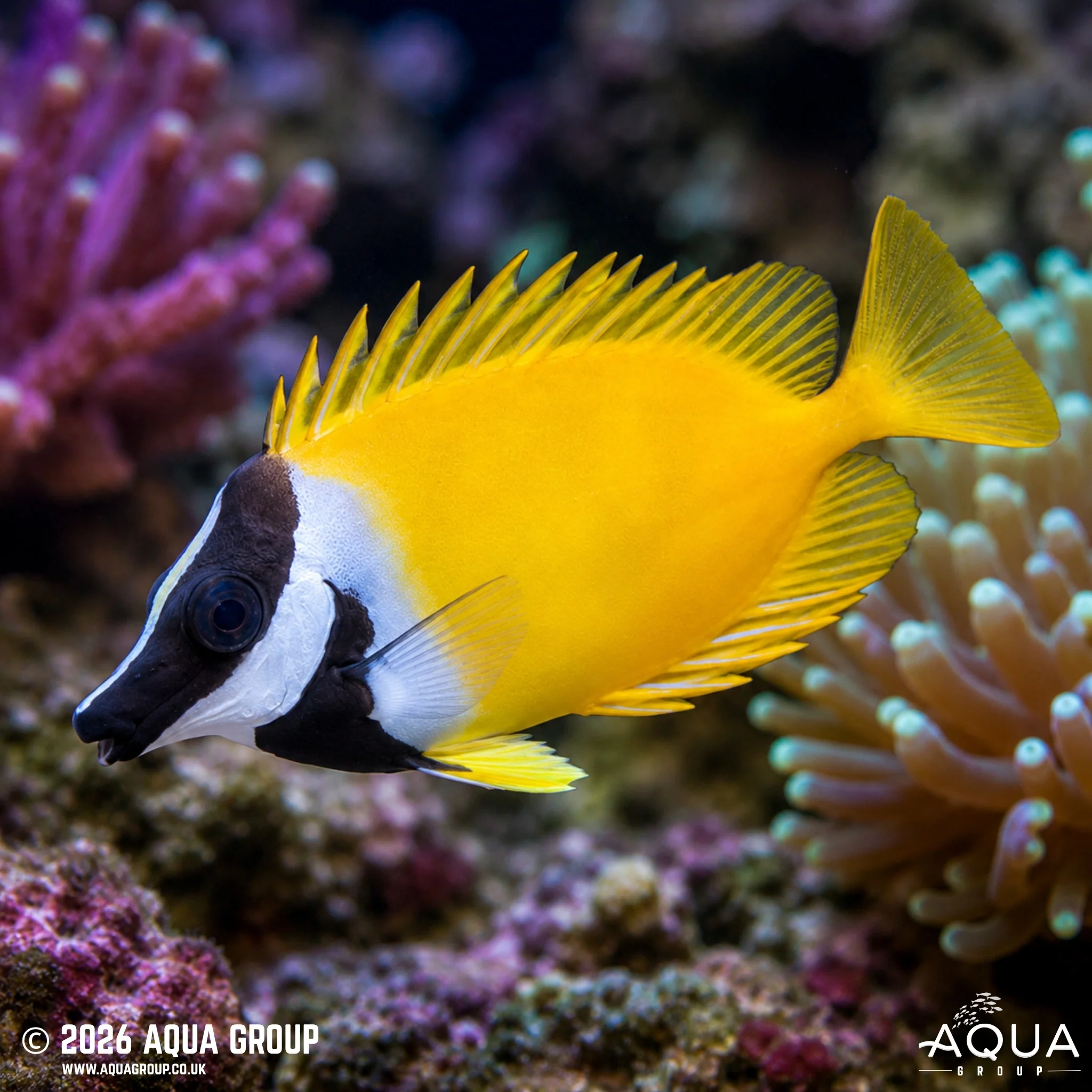
Description
Foxface Rabbitfish (Siganus vulpinus)
The Foxface Rabbitfish, Siganus vulpinus, is a bold and useful marine algae-grazing fish with a bright yellow body, white face, black facial mask and distinctive fox-like profile. Also known as the Foxface, Common Foxface or Black-face Rabbitfish, this Western Pacific species is popular in larger marine aquariums for its hardy nature, striking colour and strong appetite for nuisance algae. It is generally peaceful, reef-safe with caution and well suited to mature aquariums with plenty of swimming space, established rockwork and a regular vegetable-based diet.
Common Name:
Foxface Rabbitfish, Foxface, Common Foxface, Black-face Rabbitfish, Fox Face, Badger Fish.
Scientific Name (Latin):
Siganus vulpinus
Maximum Size:
Up to around 25 cm in the wild. Aquarium specimens are often around 20–25 cm, so this species should be planned for as a large, active rabbitfish.
Water Type:
Marine
Origin / Natural Habitat:
Western Pacific, including the Philippines, Indonesia, New Guinea, the Great Barrier Reef, New Caledonia, the Caroline Islands, Marshall Islands and nearby island regions. Naturally found on coral-rich reefs, lagoons, reef slopes and areas with branching coral and algae growth, usually in shallow to moderate depths. Adults are often seen singly or in pairs, while juveniles may occur in groups.
Water Parameters:
Temperature: 24–27°C
pH Range: 8.1–8.4
Hardness or Salinity: SG 1.020–1.025
Temperament:
Generally peaceful, but confident and capable of defending itself. It is usually compatible with many community marine fish, provided the aquarium is large enough. It may be territorial towards other rabbitfish or very similar species, and it should not be housed with fish likely to harass it, as stressed foxfaces can darken, hide or display their venomous spines.
Diet:
Primarily herbivorous to omnivorous. In the wild, it grazes algae and also takes some small planktonic or invertebrate foods. In the aquarium, provide a vegetable-rich diet including marine algae sheets, nori, spirulina flakes, herbivore pellets, algae-based frozen foods and regular grazing opportunities on live rock. Supplement with small amounts of mysis, brineshrimp, chopped clam or mixed marine frozen foods. Frequent algae-based feeding helps maintain health and reduces the chance of coral or polyp picking.
Minimum Tank Size:
A minimum of 350 litres is recommended for a single specimen, with larger aquariums preferred for long-term care. This is an active, broad-bodied fish that needs both open swimming room and rockwork for grazing and shelter.
Behaviour & Activity:
An active daytime grazer that moves steadily around rockwork, glass and open reef structure searching for algae. It may wedge itself into rockwork or change colour when resting, startled or stressed, which is normal behaviour. It can be shy when first introduced but usually becomes bold once settled. Provide caves, visual barriers, open swimming space and a secure aquarium layout.
Reef Safe:
Reef Safe with Caution
Usually safe with most corals and invertebrates, and often valued for algae control in reef aquariums. However, individual fish may occasionally nip soft corals, large-polyp stony corals, zoanthids or fleshy polyps, especially if underfed or lacking vegetable matter. It is generally safe with snails, hermit crabs, cleaner shrimps and other typical reef invertebrates.
Special Requirements or Care Notes:
Foxface Rabbitfish have venomous dorsal, anal and pelvic fin spines that can cause a very painful sting, so handle with extreme care and avoid using hands near the fish when moving rockwork or netting. Use a container rather than a soft net where possible. Provide a vegetable-rich diet every day and avoid keeping with aggressive fish that may bully or stress it. It is closely related to the One Spot Foxface, Siganus unimaculatus, which has a distinct black spot on the upper rear body; check markings carefully if exact species identification matters.
Suitable for:
Intermediate fishkeepers
Availability:
Common in trade
All images are a visual representation of the fish you will receive, made to be as accurate as possible. Please note that Mother Nature is a wonderful thing, and variation in patterns and colours will occur — that is part of the unique beauty of these animals.