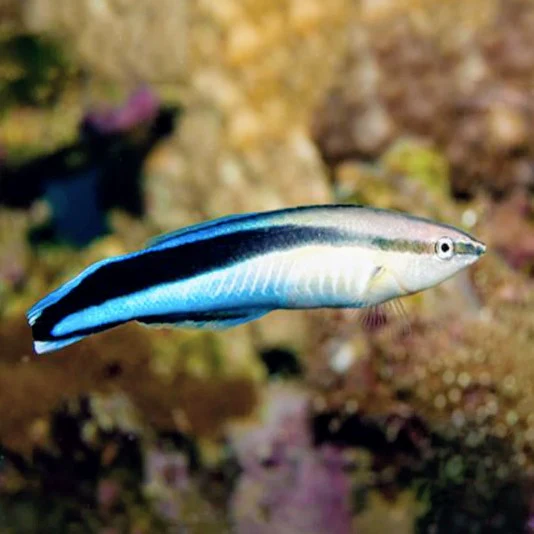
Yellow Wrasse - Halichoeres chrysus
Yellow Wrasse (Halichoeres chrysus)
The Yellow Wrasse, Halichoeres chrysus, is a bright, active and highly useful marine wrasse with a vivid golden-yellow body, subtle facial markings and black dorsal fin spots that vary with age and sex. Also known as the Canary Wrasse or Golden Wrasse, this Indo-Pacific species is popular in reef aquariums for its colour, constant movement and appetite for small benthic pests. It is generally peaceful and coral safe, but it needs a soft sand bed for sleeping, a secure lid and careful consideration around very small ornamental invertebrates.
Common Name:
Yellow Wrasse, Canary Wrasse, Golden Wrasse, Yellow Coris Wrasse.
Scientific Name (Latin):
Halichoeres chrysus
Maximum Size:
Up to around 12 cm, with some aquarium references allowing around 14 cm.
Water Type:
Marine
Origin / Natural Habitat:
Eastern Indian Ocean and Western Pacific, including Christmas Island, Indonesia, the Solomon Islands, southern Japan, Rowley Shoals, New South Wales and nearby reef regions. Naturally found on reef-associated habitats, especially sandy and rubble areas near reef edges, lagoons and reef slopes, from shallow water to deeper reef zones. It is replaced by the very similar Halichoeres leucoxanthus across much of the Indian Ocean, with some overlap around Indonesia.
Water Parameters:
Temperature: 24–27°C
pH Range: 8.1–8.4
Hardness or Salinity: SG 1.020–1.025
Temperament:
Generally peaceful and active. It is usually suitable for reef communities with other peaceful to moderately active fish, but may show territorial behaviour towards very similar wrasses, especially other Halichoeres species. Avoid housing with aggressive fish that may bully it or prevent it from feeding.
Diet:
Carnivorous micro-predator. In the wild, it feeds on small crustaceans, worms and other tiny invertebrates found around sand, rubble and reef surfaces. In the aquarium, offer frozen mysis, enriched brineshrimp, copepods, cyclops, finely chopped krill, calanus, quality marine pellets and other small meaty foods. It may help reduce some nuisance flatworms, small pyramid snails or other tiny pests, but should not be bought as a guaranteed pest-control solution.
Minimum Tank Size:
A minimum of 200 litres is recommended for a single specimen, with larger aquariums preferred for mixed wrasse communities or very active reef displays. Provide open swimming room, mature rockwork and a suitable sand bed.
Behaviour & Activity:
An energetic daytime swimmer that spends much of its time cruising around rockwork and inspecting the sand and reef surfaces for food. At night, or when startled, it buries itself in soft sand to sleep and hide. Juveniles may show multiple black ocelli on the dorsal fin and tail area, while adults become more uniformly yellow with sex-related marking changes. A tight-fitting lid or mesh cover is essential, as wrasses may jump when startled.
Reef Safe:
Reef Safe with Caution
Generally safe with corals and most sessile invertebrates, and it does not normally nip coral tissue. The caution is due to its natural hunting behaviour: it may eat small worms, fan worms, tiny crustaceans, pyramid snails, very small ornamental shrimps or other small mobile invertebrates. It may also flick sand onto low-placed corals while foraging or burying.
Special Requirements or Care Notes:
A soft, clean sand bed is essential, as this species sleeps and hides by burying itself. Avoid coarse, sharp gravel that may damage the fish. Provide a mature aquarium with live rock, stable water quality and regular feeding. A secure lid is strongly recommended. Do not mix with very aggressive wrasses or similar Halichoeres species in small aquariums. Although often called “Yellow Coris Wrasse” in the trade, it is not a true Coris wrasse.
Suitable for:
Beginner to intermediate fishkeepers
Availability:
Common in trade
All images are a visual representation of the fish you will receive, made to be as accurate as possible. Please note that Mother Nature is a wonderful thing, and variation in patterns and colours will occur — that is part of the unique beauty of these animals.
Original: $37.67
-65%$37.67
$13.18

Description
Yellow Wrasse (Halichoeres chrysus)
The Yellow Wrasse, Halichoeres chrysus, is a bright, active and highly useful marine wrasse with a vivid golden-yellow body, subtle facial markings and black dorsal fin spots that vary with age and sex. Also known as the Canary Wrasse or Golden Wrasse, this Indo-Pacific species is popular in reef aquariums for its colour, constant movement and appetite for small benthic pests. It is generally peaceful and coral safe, but it needs a soft sand bed for sleeping, a secure lid and careful consideration around very small ornamental invertebrates.
Common Name:
Yellow Wrasse, Canary Wrasse, Golden Wrasse, Yellow Coris Wrasse.
Scientific Name (Latin):
Halichoeres chrysus
Maximum Size:
Up to around 12 cm, with some aquarium references allowing around 14 cm.
Water Type:
Marine
Origin / Natural Habitat:
Eastern Indian Ocean and Western Pacific, including Christmas Island, Indonesia, the Solomon Islands, southern Japan, Rowley Shoals, New South Wales and nearby reef regions. Naturally found on reef-associated habitats, especially sandy and rubble areas near reef edges, lagoons and reef slopes, from shallow water to deeper reef zones. It is replaced by the very similar Halichoeres leucoxanthus across much of the Indian Ocean, with some overlap around Indonesia.
Water Parameters:
Temperature: 24–27°C
pH Range: 8.1–8.4
Hardness or Salinity: SG 1.020–1.025
Temperament:
Generally peaceful and active. It is usually suitable for reef communities with other peaceful to moderately active fish, but may show territorial behaviour towards very similar wrasses, especially other Halichoeres species. Avoid housing with aggressive fish that may bully it or prevent it from feeding.
Diet:
Carnivorous micro-predator. In the wild, it feeds on small crustaceans, worms and other tiny invertebrates found around sand, rubble and reef surfaces. In the aquarium, offer frozen mysis, enriched brineshrimp, copepods, cyclops, finely chopped krill, calanus, quality marine pellets and other small meaty foods. It may help reduce some nuisance flatworms, small pyramid snails or other tiny pests, but should not be bought as a guaranteed pest-control solution.
Minimum Tank Size:
A minimum of 200 litres is recommended for a single specimen, with larger aquariums preferred for mixed wrasse communities or very active reef displays. Provide open swimming room, mature rockwork and a suitable sand bed.
Behaviour & Activity:
An energetic daytime swimmer that spends much of its time cruising around rockwork and inspecting the sand and reef surfaces for food. At night, or when startled, it buries itself in soft sand to sleep and hide. Juveniles may show multiple black ocelli on the dorsal fin and tail area, while adults become more uniformly yellow with sex-related marking changes. A tight-fitting lid or mesh cover is essential, as wrasses may jump when startled.
Reef Safe:
Reef Safe with Caution
Generally safe with corals and most sessile invertebrates, and it does not normally nip coral tissue. The caution is due to its natural hunting behaviour: it may eat small worms, fan worms, tiny crustaceans, pyramid snails, very small ornamental shrimps or other small mobile invertebrates. It may also flick sand onto low-placed corals while foraging or burying.
Special Requirements or Care Notes:
A soft, clean sand bed is essential, as this species sleeps and hides by burying itself. Avoid coarse, sharp gravel that may damage the fish. Provide a mature aquarium with live rock, stable water quality and regular feeding. A secure lid is strongly recommended. Do not mix with very aggressive wrasses or similar Halichoeres species in small aquariums. Although often called “Yellow Coris Wrasse” in the trade, it is not a true Coris wrasse.
Suitable for:
Beginner to intermediate fishkeepers
Availability:
Common in trade
All images are a visual representation of the fish you will receive, made to be as accurate as possible. Please note that Mother Nature is a wonderful thing, and variation in patterns and colours will occur — that is part of the unique beauty of these animals.