Picasso Starfish - Linckia Multifora
Picasso Starfish (Linckia multifora)
The Picasso Starfish, Linckia multifora, is a striking marine sea star with long slender arms and highly variable mottled markings in cream, blue, purple, pink, red, brown or fawn tones. Also known as the Multicolour Sea Star, Spotted Linckia or Dalmatian Linckia, this Indo-Pacific invertebrate is admired for its unique natural patterning and peaceful reef presence. It is generally reef safe, but it is a specialist grazer rather than a simple clean-up crew animal, and should only be added to mature, stable marine aquariums with abundant natural biofilm and grazing surfaces.
Common Name:
Picasso Starfish, Picasso Sea Star, Multicolour Sea Star, Spotted Linckia, Dalmatian Linckia, Mottled Linckia, Multi-pore Sea Star.
Scientific Name (Latin):
Linckia multifora
Maximum Size:
Usually around 12–15 cm across, though size can vary between individuals and regional forms.
Water Type:
Marine
Origin / Natural Habitat:
Indo-Pacific, including the Red Sea, Indian Ocean and Pacific reef regions. Naturally found on coral reefs, rocky substrates, rubble areas and reef flats, from shallow water to deeper reef zones. It spends its time moving over hard surfaces, rockwork and reef structure while grazing on natural films and microscopic food sources.
Water Parameters:
Temperature: 24–27°C
pH Range: 8.1–8.4
Hardness or Salinity: SG 1.023–1.025
Temperament:
Peaceful. It will not bother fish, corals or most mobile invertebrates, but it is vulnerable to predatory or nipping tank mates such as triggers, puffers, harlequin shrimp, some large wrasses and aggressive crabs.
Diet:
Specialist grazer. In the aquarium, it feeds mainly on biofilm, bacterial films, microalgae, detrital films, sponge growth and other microscopic material growing on mature live rock and aquarium surfaces. It is not usually a reliable feeder on standard prepared foods, though some individuals may occasionally accept tiny pieces of clam, mussel or other marine foods. A mature aquarium with established natural grazing is essential.
Minimum Tank Size:
A minimum of 250 litres is recommended for a single specimen, with larger, mature reef aquariums preferred. Smaller or newly established systems often cannot provide enough natural film growth to support this species long term.
Behaviour & Activity:
A slow-moving grazing sea star that spends much of its time travelling over live rock, glass, reef structure and shaded surfaces. It may be more active at night or during quieter periods. Like other Linckia sea stars, it has strong regenerative ability and may naturally shed or regrow arms, but damaged or deteriorating arms can also be a sign of stress, starvation or poor acclimation.
Reef Safe:
Reef Safe
Generally safe with corals, snails, hermit crabs, cleaner shrimps and most peaceful reef inhabitants. It does not eat coral tissue, but it should not be kept with starfish-eating animals such as Harlequin Shrimp. The main reef concern is not aggression, but whether the aquarium is mature enough to provide long-term natural grazing.
Special Requirements or Care Notes:
Requires very stable salinity, excellent water quality and slow acclimation. Like most echinoderms, it is highly sensitive to rapid changes in salinity, pH and temperature, and should never be exposed to copper-based treatments. Avoid exposing it to air during transfer where possible. Best added only to mature reef aquariums with plenty of established live rock and natural surface growth. Do not treat it as a short-term algae cleaner; starvation can be slow and difficult to detect until condition declines.
Suitable for:
Experienced fishkeepers
Availability:
Occasional in trade
All images are a visual representation of the animal you will receive, made to be as accurate as possible. Please note that Mother Nature is a wonderful thing, and variation in patterns and colours will occur — that is part of the unique beauty of these animals.
Original: $29.53
-65%$29.53
$10.34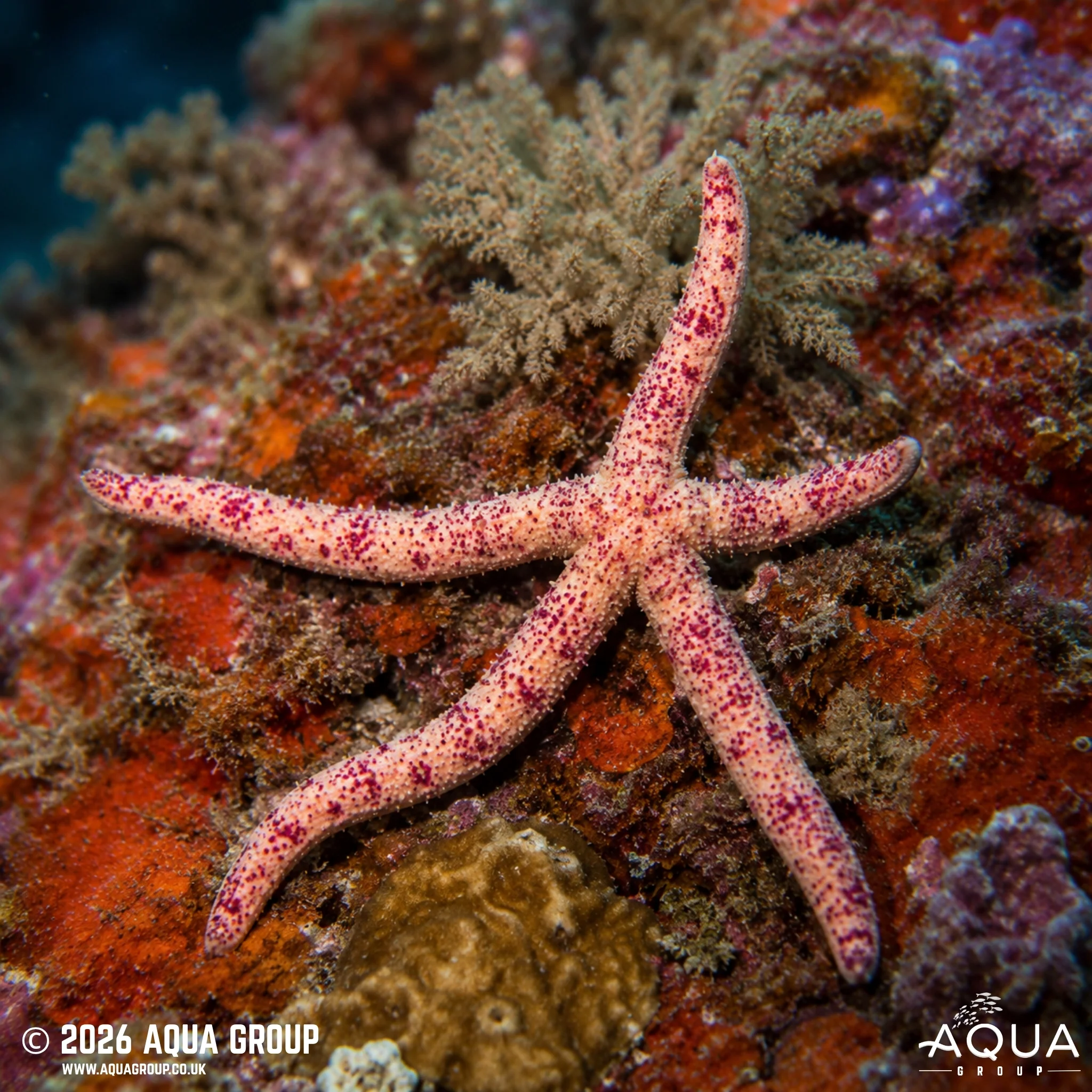
Description
Picasso Starfish (Linckia multifora)
The Picasso Starfish, Linckia multifora, is a striking marine sea star with long slender arms and highly variable mottled markings in cream, blue, purple, pink, red, brown or fawn tones. Also known as the Multicolour Sea Star, Spotted Linckia or Dalmatian Linckia, this Indo-Pacific invertebrate is admired for its unique natural patterning and peaceful reef presence. It is generally reef safe, but it is a specialist grazer rather than a simple clean-up crew animal, and should only be added to mature, stable marine aquariums with abundant natural biofilm and grazing surfaces.
Common Name:
Picasso Starfish, Picasso Sea Star, Multicolour Sea Star, Spotted Linckia, Dalmatian Linckia, Mottled Linckia, Multi-pore Sea Star.
Scientific Name (Latin):
Linckia multifora
Maximum Size:
Usually around 12–15 cm across, though size can vary between individuals and regional forms.
Water Type:
Marine
Origin / Natural Habitat:
Indo-Pacific, including the Red Sea, Indian Ocean and Pacific reef regions. Naturally found on coral reefs, rocky substrates, rubble areas and reef flats, from shallow water to deeper reef zones. It spends its time moving over hard surfaces, rockwork and reef structure while grazing on natural films and microscopic food sources.
Water Parameters:
Temperature: 24–27°C
pH Range: 8.1–8.4
Hardness or Salinity: SG 1.023–1.025
Temperament:
Peaceful. It will not bother fish, corals or most mobile invertebrates, but it is vulnerable to predatory or nipping tank mates such as triggers, puffers, harlequin shrimp, some large wrasses and aggressive crabs.
Diet:
Specialist grazer. In the aquarium, it feeds mainly on biofilm, bacterial films, microalgae, detrital films, sponge growth and other microscopic material growing on mature live rock and aquarium surfaces. It is not usually a reliable feeder on standard prepared foods, though some individuals may occasionally accept tiny pieces of clam, mussel or other marine foods. A mature aquarium with established natural grazing is essential.
Minimum Tank Size:
A minimum of 250 litres is recommended for a single specimen, with larger, mature reef aquariums preferred. Smaller or newly established systems often cannot provide enough natural film growth to support this species long term.
Behaviour & Activity:
A slow-moving grazing sea star that spends much of its time travelling over live rock, glass, reef structure and shaded surfaces. It may be more active at night or during quieter periods. Like other Linckia sea stars, it has strong regenerative ability and may naturally shed or regrow arms, but damaged or deteriorating arms can also be a sign of stress, starvation or poor acclimation.
Reef Safe:
Reef Safe
Generally safe with corals, snails, hermit crabs, cleaner shrimps and most peaceful reef inhabitants. It does not eat coral tissue, but it should not be kept with starfish-eating animals such as Harlequin Shrimp. The main reef concern is not aggression, but whether the aquarium is mature enough to provide long-term natural grazing.
Special Requirements or Care Notes:
Requires very stable salinity, excellent water quality and slow acclimation. Like most echinoderms, it is highly sensitive to rapid changes in salinity, pH and temperature, and should never be exposed to copper-based treatments. Avoid exposing it to air during transfer where possible. Best added only to mature reef aquariums with plenty of established live rock and natural surface growth. Do not treat it as a short-term algae cleaner; starvation can be slow and difficult to detect until condition declines.
Suitable for:
Experienced fishkeepers
Availability:
Occasional in trade
All images are a visual representation of the animal you will receive, made to be as accurate as possible. Please note that Mother Nature is a wonderful thing, and variation in patterns and colours will occur — that is part of the unique beauty of these animals.