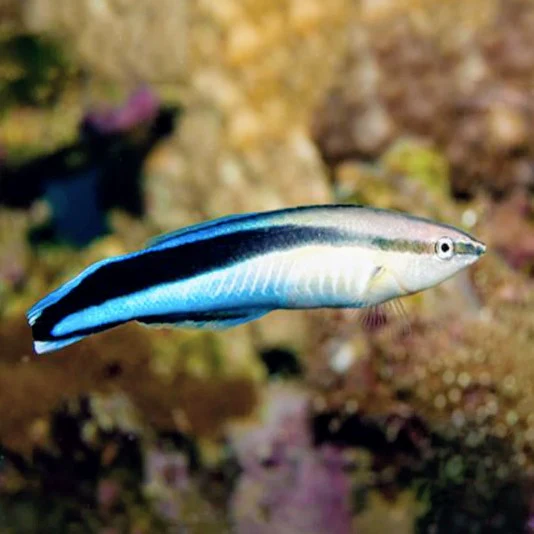
Quoyi Parrotfish - Scarus quoyi
Quoyi Parrotfish (Scarus quoyi)
The Quoyi Parrotfish, Scarus quoyi, is a colourful and unusual marine herbivore with a streamlined body, green to blue markings, orange facial tones and the beak-like mouth typical of parrotfish. Also known as Quoy’s Parrotfish, Greenblotch Parrotfish or Green-blotched Parrotfish, this Indo-West Pacific species is one of the more aquarium-suitable parrotfish when kept in a very large, mature system. It is generally peaceful and often considered reef safe with caution, but its adult size, grazing needs and waste production mean it is best suited to experienced marine keepers with spacious aquariums.
Common Name:
Quoyi Parrotfish, Quoy’s Parrotfish, Greenblotch Parrotfish, Green-blotched Parrotfish, Quoyi Parrot.
Scientific Name (Latin):
Scarus quoyi
Maximum Size:
Up to around 40 cm in the wild. Aquarium specimens may be smaller, but should still be planned for as a large, active parrotfish.
Water Type:
Marine
Origin / Natural Habitat:
Indo-West Pacific, from India across to Vanuatu, north to the Ryukyu Islands and south to New Caledonia, including Palau in Micronesia. Naturally found in coral-rich outer channels, seaward reefs and intertidal reef flats, where it grazes algae from reef surfaces, often singly or in small groups.
Water Parameters:
Temperature: 24–27°C
pH Range: 8.1–8.4
Hardness or Salinity: SG 1.020–1.025
Temperament:
Generally peaceful for a large reef fish, but active and strong. It is usually not aggressive towards unrelated fish, although it may become dominant simply because of its size and feeding activity. Best kept with peaceful to moderately robust marine fish that will not bully it or compete aggressively for grazing space.
Diet:
Primarily herbivorous. In the wild, it grazes algae from reef flats and coral-rich reef areas. In the aquarium, provide a vegetable-rich diet including marine algae sheets, nori, spirulina flakes, herbivore pellets, algae-based frozen foods and natural grazing on mature rockwork. Supplement occasionally with mysis, brineshrimp or mixed marine frozen foods, but algae and plant-based foods should remain central to the diet.
Minimum Tank Size:
A minimum of 600 litres is recommended for a single juvenile or subadult, with 900 litres or more strongly preferred for long-term adult care. This is a large, active grazer that needs swimming space, mature live rock, strong filtration and high oxygenation.
Behaviour & Activity:
An active daytime grazer that cruises over rockwork and reef structure, picking at algae films with its beak-like mouth. It spends much of its time foraging and benefits from open swimming areas as well as rockwork with established natural growth. Like many large herbivores, it produces a significant amount of waste, so strong filtration and regular maintenance are important. It may sleep tucked into rockwork at night.
Reef Safe:
Reef Safe with Caution
Often regarded as one of the more reef-suitable parrotfish and not typically a dedicated coral-eater in aquariums. However, caution is still appropriate because it has a strong beak, may scrape hard surfaces while grazing, can disturb loose frags or delicate placements, and may investigate some sessile growths. It is generally a better candidate for large, mature reef systems than most parrotfish, but it should not be considered risk-free.
Special Requirements or Care Notes:
Requires a very large, mature marine aquarium with constant access to algae-based foods and grazing surfaces. Provide strong filtration, high oxygenation and stable water quality to manage its size and waste output. Avoid small aquariums, immature systems and delicate reef layouts with unsecured frags. It may be shy when first introduced, so provide plenty of rockwork and avoid aggressive tank mates. This species is best chosen for long-term suitability, not as a short-term algae-control fish.
Suitable for:
Experienced fishkeepers
Availability:
Rare or occasional in trade
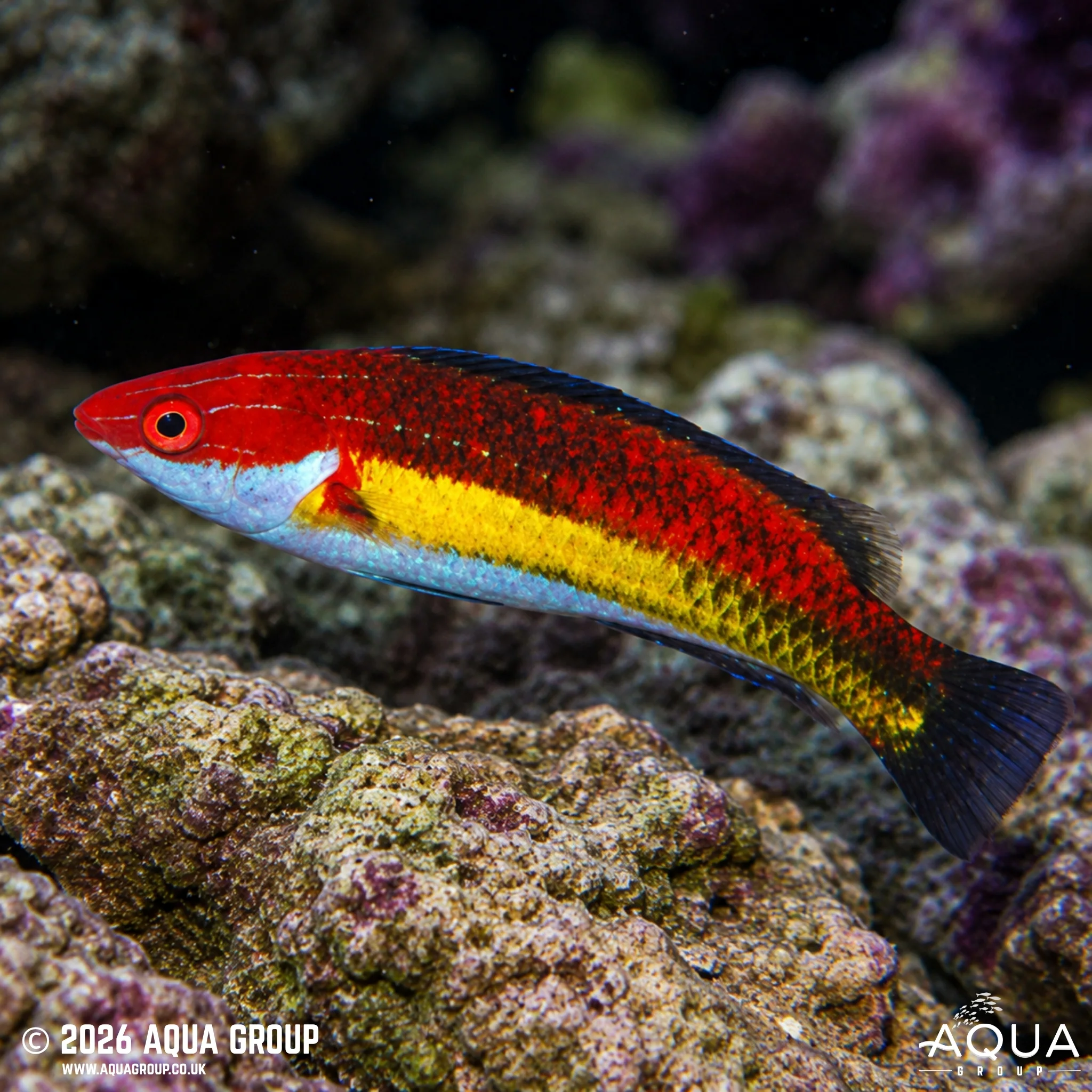
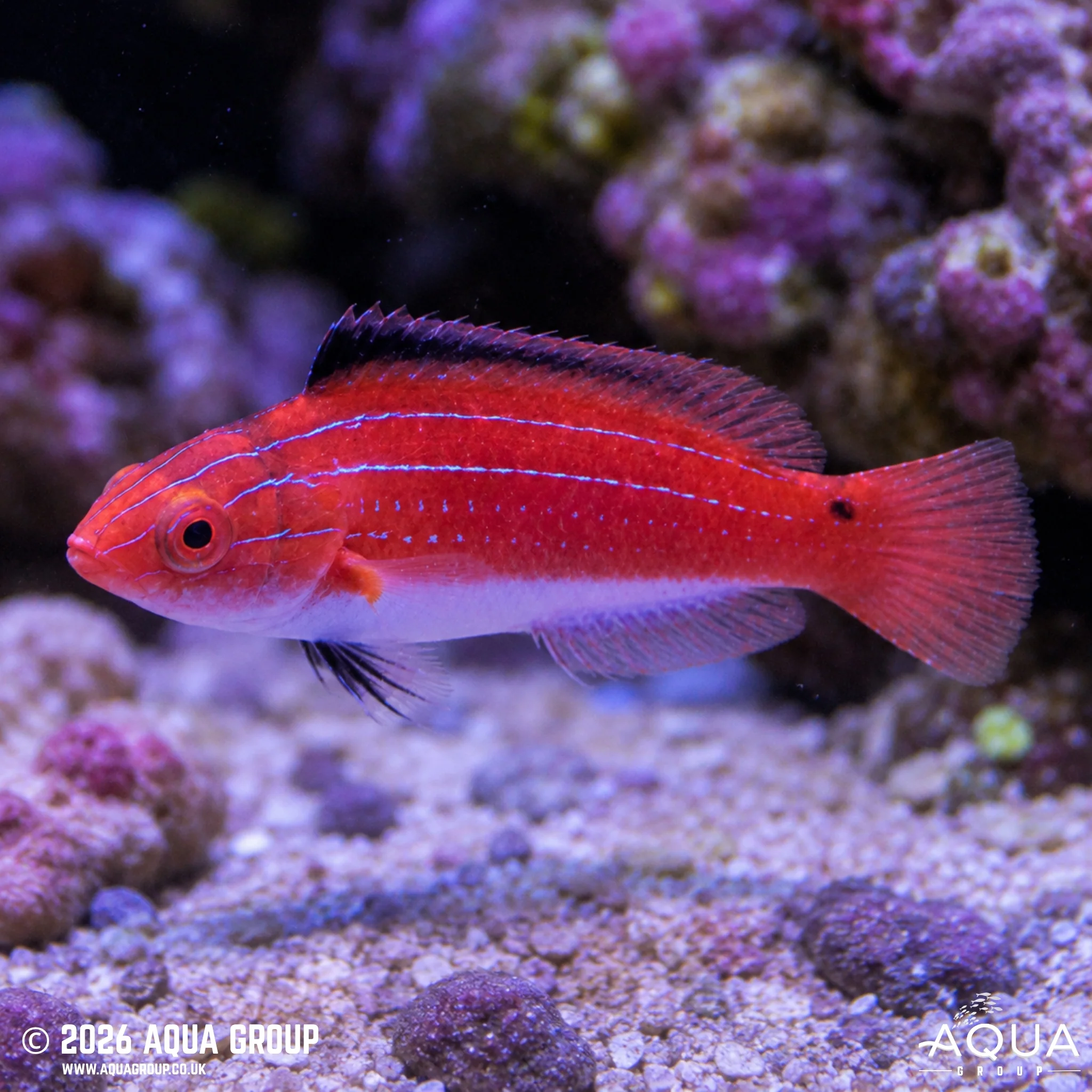
All images are a visual representation of the fish you will receive, made to be as accurate as possible. Please note that Mother Nature is a wonderful thing, and variation in patterns and colours will occur — that is part of the unique beauty of these animals.
Original: $134.53
-65%$134.53
$47.09
Description
Quoyi Parrotfish (Scarus quoyi)
The Quoyi Parrotfish, Scarus quoyi, is a colourful and unusual marine herbivore with a streamlined body, green to blue markings, orange facial tones and the beak-like mouth typical of parrotfish. Also known as Quoy’s Parrotfish, Greenblotch Parrotfish or Green-blotched Parrotfish, this Indo-West Pacific species is one of the more aquarium-suitable parrotfish when kept in a very large, mature system. It is generally peaceful and often considered reef safe with caution, but its adult size, grazing needs and waste production mean it is best suited to experienced marine keepers with spacious aquariums.
Common Name:
Quoyi Parrotfish, Quoy’s Parrotfish, Greenblotch Parrotfish, Green-blotched Parrotfish, Quoyi Parrot.
Scientific Name (Latin):
Scarus quoyi
Maximum Size:
Up to around 40 cm in the wild. Aquarium specimens may be smaller, but should still be planned for as a large, active parrotfish.
Water Type:
Marine
Origin / Natural Habitat:
Indo-West Pacific, from India across to Vanuatu, north to the Ryukyu Islands and south to New Caledonia, including Palau in Micronesia. Naturally found in coral-rich outer channels, seaward reefs and intertidal reef flats, where it grazes algae from reef surfaces, often singly or in small groups.
Water Parameters:
Temperature: 24–27°C
pH Range: 8.1–8.4
Hardness or Salinity: SG 1.020–1.025
Temperament:
Generally peaceful for a large reef fish, but active and strong. It is usually not aggressive towards unrelated fish, although it may become dominant simply because of its size and feeding activity. Best kept with peaceful to moderately robust marine fish that will not bully it or compete aggressively for grazing space.
Diet:
Primarily herbivorous. In the wild, it grazes algae from reef flats and coral-rich reef areas. In the aquarium, provide a vegetable-rich diet including marine algae sheets, nori, spirulina flakes, herbivore pellets, algae-based frozen foods and natural grazing on mature rockwork. Supplement occasionally with mysis, brineshrimp or mixed marine frozen foods, but algae and plant-based foods should remain central to the diet.
Minimum Tank Size:
A minimum of 600 litres is recommended for a single juvenile or subadult, with 900 litres or more strongly preferred for long-term adult care. This is a large, active grazer that needs swimming space, mature live rock, strong filtration and high oxygenation.
Behaviour & Activity:
An active daytime grazer that cruises over rockwork and reef structure, picking at algae films with its beak-like mouth. It spends much of its time foraging and benefits from open swimming areas as well as rockwork with established natural growth. Like many large herbivores, it produces a significant amount of waste, so strong filtration and regular maintenance are important. It may sleep tucked into rockwork at night.
Reef Safe:
Reef Safe with Caution
Often regarded as one of the more reef-suitable parrotfish and not typically a dedicated coral-eater in aquariums. However, caution is still appropriate because it has a strong beak, may scrape hard surfaces while grazing, can disturb loose frags or delicate placements, and may investigate some sessile growths. It is generally a better candidate for large, mature reef systems than most parrotfish, but it should not be considered risk-free.
Special Requirements or Care Notes:
Requires a very large, mature marine aquarium with constant access to algae-based foods and grazing surfaces. Provide strong filtration, high oxygenation and stable water quality to manage its size and waste output. Avoid small aquariums, immature systems and delicate reef layouts with unsecured frags. It may be shy when first introduced, so provide plenty of rockwork and avoid aggressive tank mates. This species is best chosen for long-term suitability, not as a short-term algae-control fish.
Suitable for:
Experienced fishkeepers
Availability:
Rare or occasional in trade
All images are a visual representation of the fish you will receive, made to be as accurate as possible. Please note that Mother Nature is a wonderful thing, and variation in patterns and colours will occur — that is part of the unique beauty of these animals.