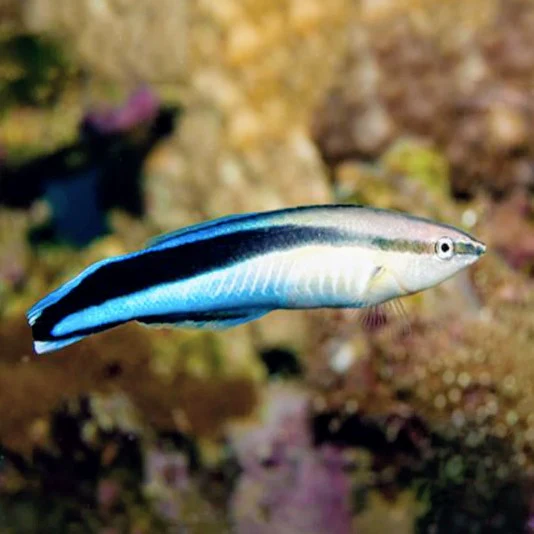
Blue Jigsaw Triggerfish - Pseudobalistes fuscus
Blue Jigsaw Triggerfish (Pseudobalistes fuscus)
The Blue Jigsaw Triggerfish, Pseudobalistes fuscus, is a powerful and striking Indo-Pacific triggerfish with a bold blue, green and grey body pattern that can appear like interlocking lines or jigsaw markings, especially in younger specimens. Also known as the Blue Triggerfish, Blue-lined Triggerfish, Rippled Triggerfish or Yellow-spotted Triggerfish, this species is hardy, intelligent and full of character. It is best suited to large fish-only marine aquariums, as it becomes robust, territorial and unsuitable for reef displays with corals or small ornamental invertebrates.
Common Name:
Blue Jigsaw Triggerfish, Blue Jigsaw Trigger, Blue Triggerfish, Blue-lined Triggerfish, Blueline Triggerfish, Rippled Triggerfish, Yellow-spotted Triggerfish, Blue-and-gold Triggerfish.
Scientific Name (Latin):
Pseudobalistes fuscus
Maximum Size:
Up to around 55 cm in the wild. Aquarium specimens may be smaller, but this species should still be planned for as a very large, heavy-bodied triggerfish.
Water Type:
Marine
Origin / Natural Habitat:
Indo-Pacific, from the Red Sea and East Africa across the Indian Ocean and western Pacific to the Society Islands, north to southern Japan and south to northern Australia. Naturally found around clear lagoons, coastal reefs, seaward reef edges, sandy areas near reef patches and reef slopes, often at depths of around 30–50 m. Juveniles may occur closer to shallow rubble and reef outcrops, while adults are more associated with larger reef structures and deeper reef areas.
Water Parameters:
Temperature: 24–27°C
pH Range: 8.1–8.4
Hardness or Salinity: SG 1.020–1.025
Temperament:
Semi-aggressive to aggressive. This is a strong, confident triggerfish that can become territorial, especially as it matures. It should be kept with robust tank mates of suitable size and should not be mixed with small, timid or delicate fish that may be harassed or eaten.
Diet:
Omnivorous predator. In the wild, it feeds on a range of hard-shelled and benthic foods including crustaceans, molluscs, sea urchins, tunicates, smaller fish, algae and coral material. In the aquarium, offer a varied diet of chopped prawns, mussel, clam, cockle, squid, krill, marine fish flesh, quality carnivore pellets and occasional algae-based foods. Include hard-shelled items where appropriate to help wear the teeth naturally.
Minimum Tank Size:
A minimum of 900 litres is recommended for long-term care, with larger aquariums strongly preferred. This is a large, muscular fish that needs substantial swimming room, heavy filtration and secure rockwork.
Behaviour & Activity:
An active, intelligent triggerfish that explores rockwork, rearranges loose items and investigates food sources with a powerful bite. It may wedge itself into rockwork using its trigger spine when resting or alarmed. Provide strong caves, open swimming areas and stable aquascaping, as adults can move unsecured rocks or ornaments. It is best kept in a spacious fish-only or fish-only-with-live-rock system.
Reef Safe:
Not Reef Safe
Not suitable for reef aquariums. It may nip or consume corals and is likely to prey on many ornamental invertebrates, including shrimps, crabs, snails, urchins, clams, tube worms and other sessile or mobile invertebrates. Its size, strength and feeding behaviour also make it unsuitable for delicate reef systems.
Special Requirements or Care Notes:
Requires a very large aquarium, powerful filtration and careful tank mate selection. Secure all rockwork before adding the fish, as triggerfish can dig, push and rearrange decor. Avoid keeping with small fish, slow-moving species, ornamental crustaceans or delicate tank mates. Use caution during maintenance, as large triggerfish have strong jaws and can bite. This species is hardy once settled, but its adult size and temperament make it a fish for experienced marine keepers with appropriate facilities.
Suitable for:
Experienced fishkeepers
Availability:
Occasional in trade
All images are a visual representation of the fish you will receive, made to be as accurate as possible. Please note that Mother Nature is a wonderful thing, and variation in patterns and colours will occur — that is part of the unique beauty of these animals.
Original: $87.44
-65%$87.44
$30.60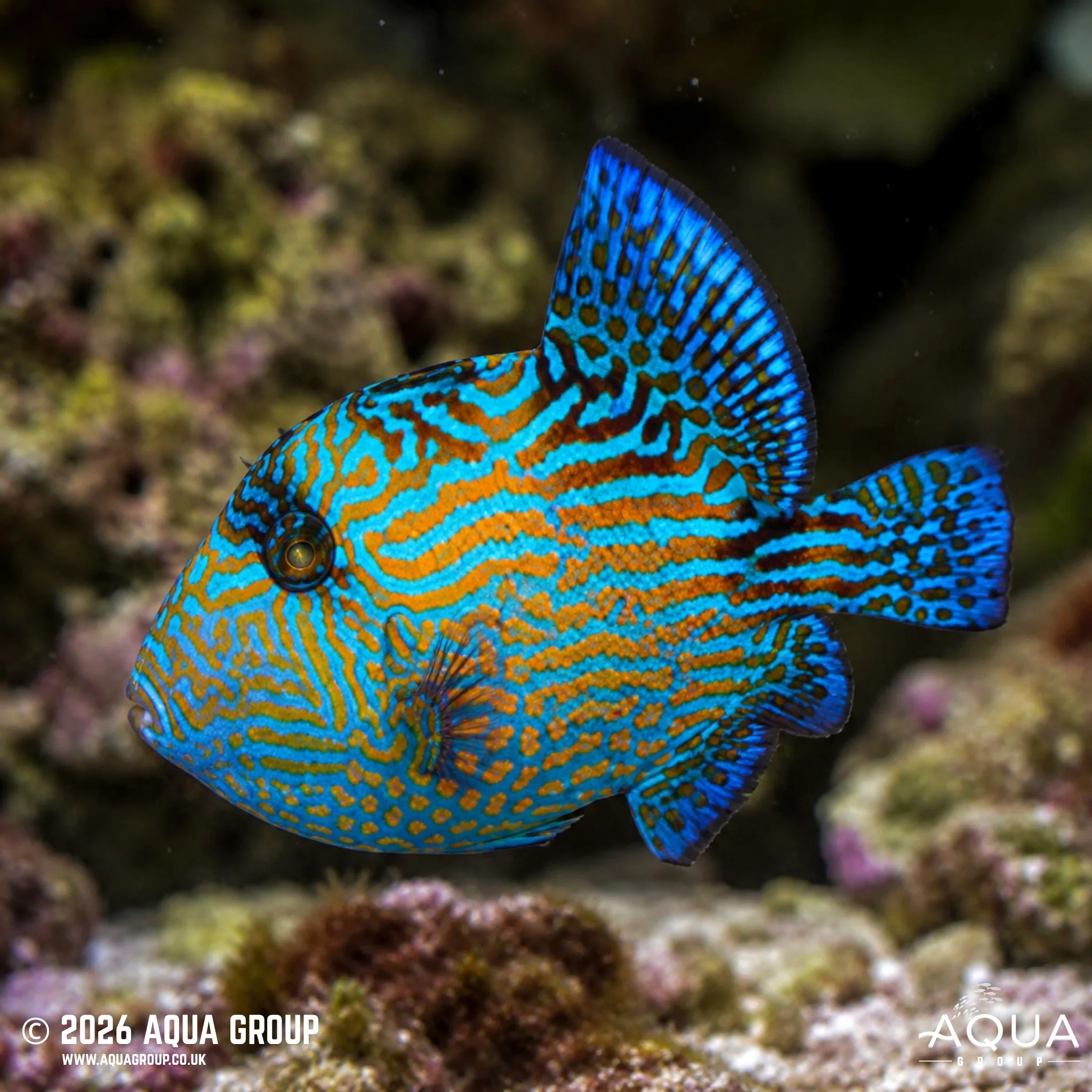
Description
Blue Jigsaw Triggerfish (Pseudobalistes fuscus)
The Blue Jigsaw Triggerfish, Pseudobalistes fuscus, is a powerful and striking Indo-Pacific triggerfish with a bold blue, green and grey body pattern that can appear like interlocking lines or jigsaw markings, especially in younger specimens. Also known as the Blue Triggerfish, Blue-lined Triggerfish, Rippled Triggerfish or Yellow-spotted Triggerfish, this species is hardy, intelligent and full of character. It is best suited to large fish-only marine aquariums, as it becomes robust, territorial and unsuitable for reef displays with corals or small ornamental invertebrates.
Common Name:
Blue Jigsaw Triggerfish, Blue Jigsaw Trigger, Blue Triggerfish, Blue-lined Triggerfish, Blueline Triggerfish, Rippled Triggerfish, Yellow-spotted Triggerfish, Blue-and-gold Triggerfish.
Scientific Name (Latin):
Pseudobalistes fuscus
Maximum Size:
Up to around 55 cm in the wild. Aquarium specimens may be smaller, but this species should still be planned for as a very large, heavy-bodied triggerfish.
Water Type:
Marine
Origin / Natural Habitat:
Indo-Pacific, from the Red Sea and East Africa across the Indian Ocean and western Pacific to the Society Islands, north to southern Japan and south to northern Australia. Naturally found around clear lagoons, coastal reefs, seaward reef edges, sandy areas near reef patches and reef slopes, often at depths of around 30–50 m. Juveniles may occur closer to shallow rubble and reef outcrops, while adults are more associated with larger reef structures and deeper reef areas.
Water Parameters:
Temperature: 24–27°C
pH Range: 8.1–8.4
Hardness or Salinity: SG 1.020–1.025
Temperament:
Semi-aggressive to aggressive. This is a strong, confident triggerfish that can become territorial, especially as it matures. It should be kept with robust tank mates of suitable size and should not be mixed with small, timid or delicate fish that may be harassed or eaten.
Diet:
Omnivorous predator. In the wild, it feeds on a range of hard-shelled and benthic foods including crustaceans, molluscs, sea urchins, tunicates, smaller fish, algae and coral material. In the aquarium, offer a varied diet of chopped prawns, mussel, clam, cockle, squid, krill, marine fish flesh, quality carnivore pellets and occasional algae-based foods. Include hard-shelled items where appropriate to help wear the teeth naturally.
Minimum Tank Size:
A minimum of 900 litres is recommended for long-term care, with larger aquariums strongly preferred. This is a large, muscular fish that needs substantial swimming room, heavy filtration and secure rockwork.
Behaviour & Activity:
An active, intelligent triggerfish that explores rockwork, rearranges loose items and investigates food sources with a powerful bite. It may wedge itself into rockwork using its trigger spine when resting or alarmed. Provide strong caves, open swimming areas and stable aquascaping, as adults can move unsecured rocks or ornaments. It is best kept in a spacious fish-only or fish-only-with-live-rock system.
Reef Safe:
Not Reef Safe
Not suitable for reef aquariums. It may nip or consume corals and is likely to prey on many ornamental invertebrates, including shrimps, crabs, snails, urchins, clams, tube worms and other sessile or mobile invertebrates. Its size, strength and feeding behaviour also make it unsuitable for delicate reef systems.
Special Requirements or Care Notes:
Requires a very large aquarium, powerful filtration and careful tank mate selection. Secure all rockwork before adding the fish, as triggerfish can dig, push and rearrange decor. Avoid keeping with small fish, slow-moving species, ornamental crustaceans or delicate tank mates. Use caution during maintenance, as large triggerfish have strong jaws and can bite. This species is hardy once settled, but its adult size and temperament make it a fish for experienced marine keepers with appropriate facilities.
Suitable for:
Experienced fishkeepers
Availability:
Occasional in trade
All images are a visual representation of the fish you will receive, made to be as accurate as possible. Please note that Mother Nature is a wonderful thing, and variation in patterns and colours will occur — that is part of the unique beauty of these animals.