Blue Sapphire Damselfish - Chrysiptera springeri
Blue Sapphire Damselfish (Chrysiptera springeri)
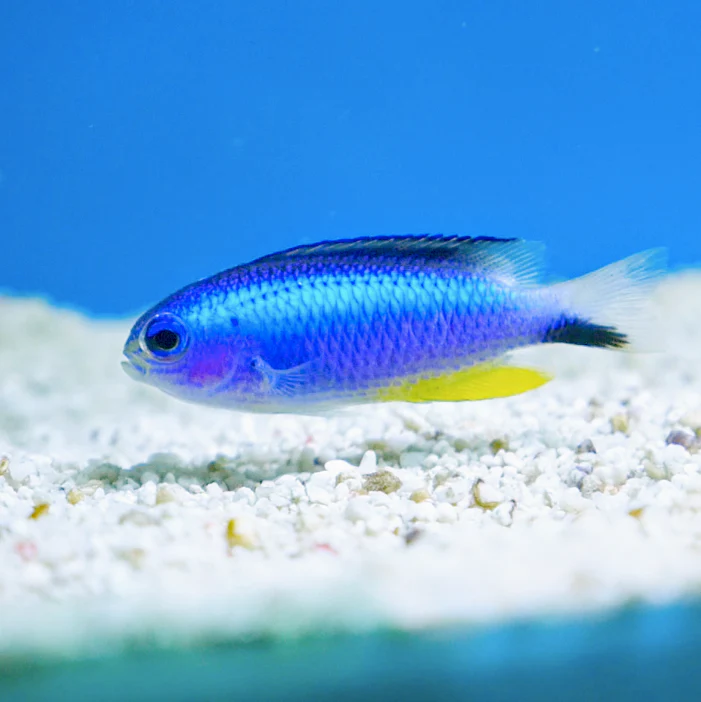
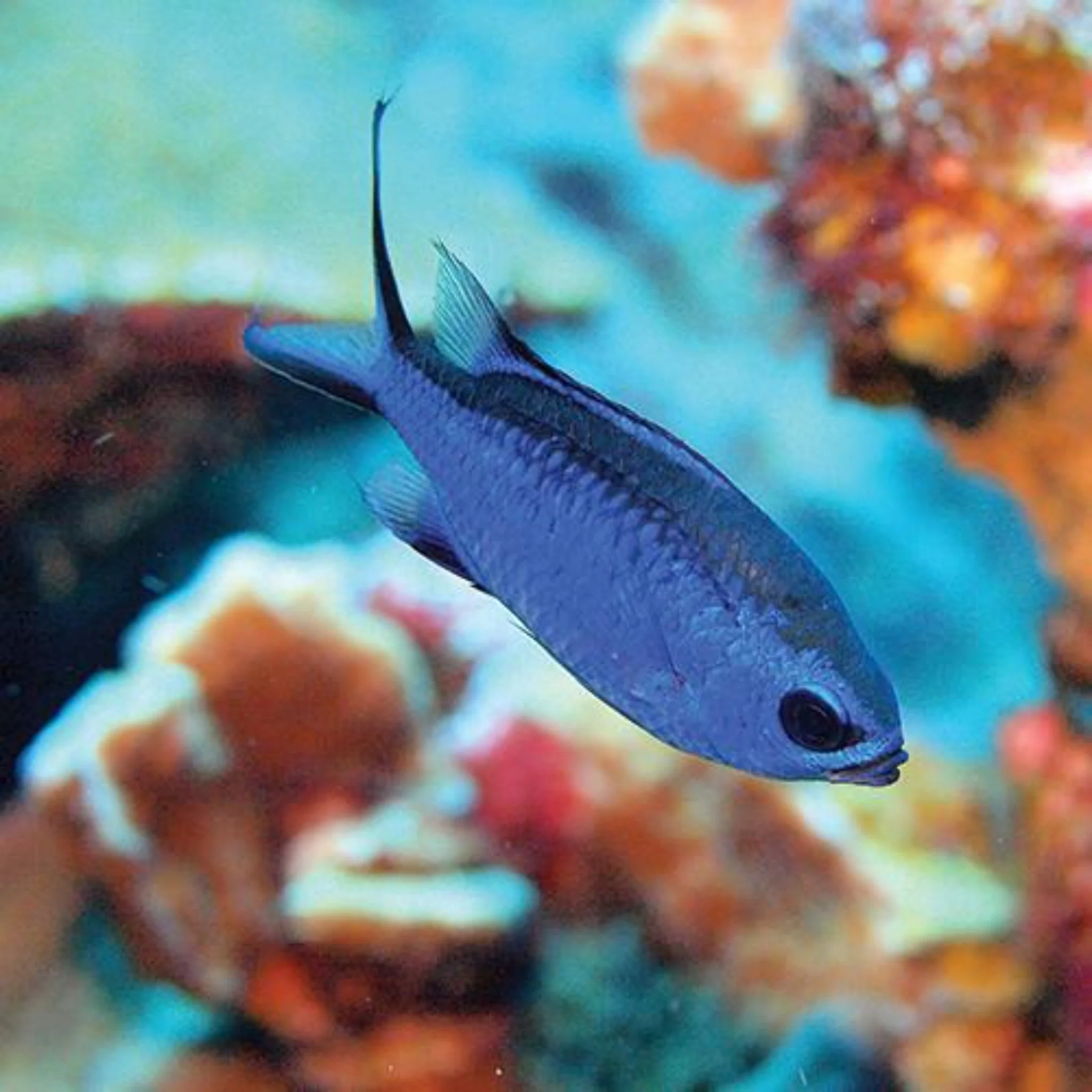
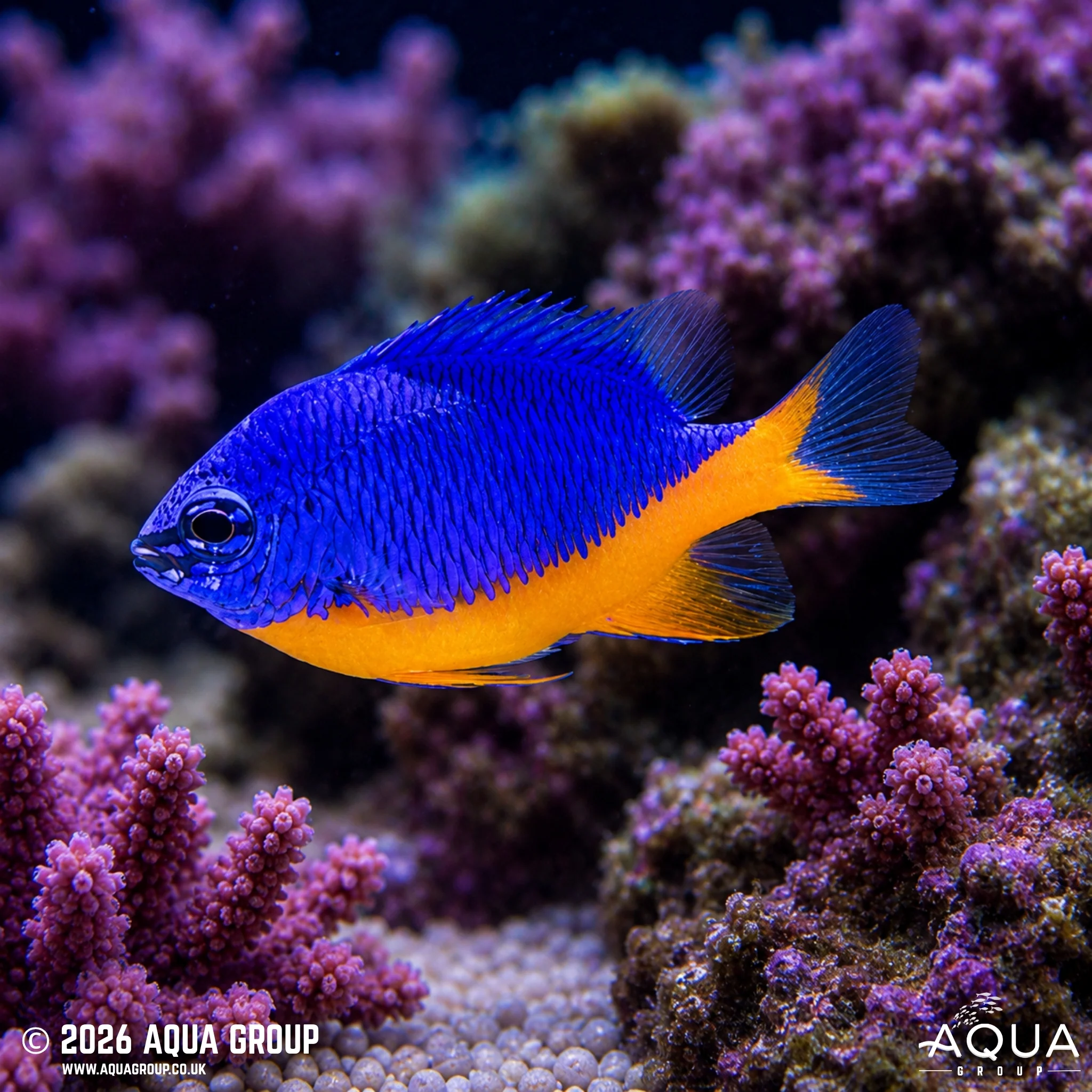
The Blue Sapphire Damselfish, Chrysiptera springeri, is a vivid electric-blue marine damselfish prized for its intense colour, hardy nature and more manageable temperament compared with many larger damsels. Also known as Springer's Damselfish, Springer's Demoiselle or the Royal Blue Damselfish, this Western Pacific species is a popular choice for reef aquariums with strong rockwork and active, confident tank mates. It is reef safe and relatively small, but like all damselfish, it can become territorial once settled.
Common Name:
Blue Sapphire Damselfish, Springer's Damselfish, Springer's Demoiselle, Royal Blue Damselfish, Sapphire Damsel, Springeri Damsel.
Scientific Name (Latin):
Chrysiptera springeri
Maximum Size:
Up to around 5.5 cm.
Water Type:
Marine
Origin / Natural Habitat:
Western Pacific, especially Indonesia and the Philippines. Naturally found on sheltered lagoon reefs, inshore coral reefs and coastal reef slopes, often around low Acropora coral patches, rubble and sandy areas where it can shelter quickly among branching structure.
Water Parameters:
Temperature: 24–27°C
pH Range: 8.1–8.4
Hardness or Salinity: SG 1.020–1.025
Temperament:
Semi-territorial but usually less aggressive than many classic damselfish species. It is generally bold, hardy and active, though mature individuals may defend a chosen cave, coral head or section of rockwork, especially in smaller aquariums.
Diet:
Omnivorous with a strong zooplankton-feeding tendency. In the aquarium, offer a varied diet of quality marine flakes, small pellets, frozen mysis, enriched brineshrimp, cyclops, copepods and occasional algae-based foods. It will usually feed readily once settled.
Minimum Tank Size:
A minimum of 100 litres is recommended for a single specimen, with larger aquariums preferred for community reef setups or if keeping more than one damselfish. Provide plenty of live rock, caves and territory breaks.
Behaviour & Activity:
An active, diurnal damselfish that spends much of its time moving between rockwork and the open water column. It often chooses a small territory around caves, coral-style structure or branching rockwork and will retreat quickly when startled. In larger aquariums it may be kept in small groups, but individual temperament varies, so space and visual barriers are important.
Reef Safe:
Reef Safe
Safe with corals, snails, hermit crabs, cleaner shrimps and most common reef invertebrates. The main risk in reef aquariums is territorial behaviour towards very timid fish, newly introduced fish or other small fish occupying the same rockwork zone. Avoid mixing with very shy species in small tanks.
Special Requirements or Care Notes:
Provide a mature, stable marine aquarium with good rock structure and hiding places. Add with care to peaceful communities, as it may become assertive after establishing territory. It is sometimes discussed as a possible flatworm-control fish in reef aquariums, but results are inconsistent and it should not be bought solely for pest control. Best kept with confident but not overly aggressive reef fish. A secure lid is recommended for all small marine fish.
Suitable for:
Beginner to intermediate fishkeepers
Availability:
Common in trade
All images are a visual representation of the fish you will receive, made to be as accurate as possible. Please note that Mother Nature is a wonderful thing, and variation in patterns and colours will occur — that is part of the unique beauty of these animals.
Original: $20.11
-65%$20.11
$7.04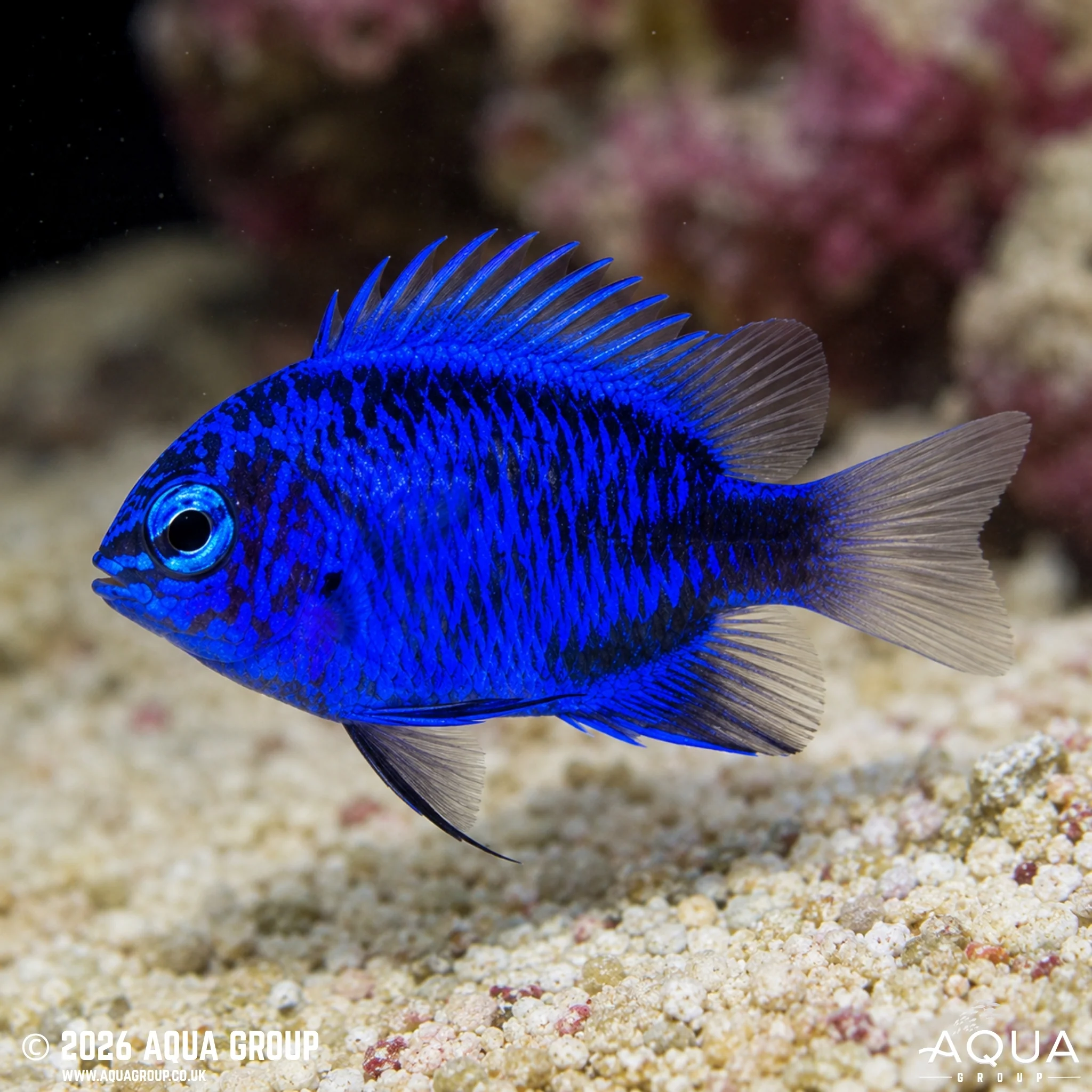
Description
Blue Sapphire Damselfish (Chrysiptera springeri)
The Blue Sapphire Damselfish, Chrysiptera springeri, is a vivid electric-blue marine damselfish prized for its intense colour, hardy nature and more manageable temperament compared with many larger damsels. Also known as Springer's Damselfish, Springer's Demoiselle or the Royal Blue Damselfish, this Western Pacific species is a popular choice for reef aquariums with strong rockwork and active, confident tank mates. It is reef safe and relatively small, but like all damselfish, it can become territorial once settled.
Common Name:
Blue Sapphire Damselfish, Springer's Damselfish, Springer's Demoiselle, Royal Blue Damselfish, Sapphire Damsel, Springeri Damsel.
Scientific Name (Latin):
Chrysiptera springeri
Maximum Size:
Up to around 5.5 cm.
Water Type:
Marine
Origin / Natural Habitat:
Western Pacific, especially Indonesia and the Philippines. Naturally found on sheltered lagoon reefs, inshore coral reefs and coastal reef slopes, often around low Acropora coral patches, rubble and sandy areas where it can shelter quickly among branching structure.
Water Parameters:
Temperature: 24–27°C
pH Range: 8.1–8.4
Hardness or Salinity: SG 1.020–1.025
Temperament:
Semi-territorial but usually less aggressive than many classic damselfish species. It is generally bold, hardy and active, though mature individuals may defend a chosen cave, coral head or section of rockwork, especially in smaller aquariums.
Diet:
Omnivorous with a strong zooplankton-feeding tendency. In the aquarium, offer a varied diet of quality marine flakes, small pellets, frozen mysis, enriched brineshrimp, cyclops, copepods and occasional algae-based foods. It will usually feed readily once settled.
Minimum Tank Size:
A minimum of 100 litres is recommended for a single specimen, with larger aquariums preferred for community reef setups or if keeping more than one damselfish. Provide plenty of live rock, caves and territory breaks.
Behaviour & Activity:
An active, diurnal damselfish that spends much of its time moving between rockwork and the open water column. It often chooses a small territory around caves, coral-style structure or branching rockwork and will retreat quickly when startled. In larger aquariums it may be kept in small groups, but individual temperament varies, so space and visual barriers are important.
Reef Safe:
Reef Safe
Safe with corals, snails, hermit crabs, cleaner shrimps and most common reef invertebrates. The main risk in reef aquariums is territorial behaviour towards very timid fish, newly introduced fish or other small fish occupying the same rockwork zone. Avoid mixing with very shy species in small tanks.
Special Requirements or Care Notes:
Provide a mature, stable marine aquarium with good rock structure and hiding places. Add with care to peaceful communities, as it may become assertive after establishing territory. It is sometimes discussed as a possible flatworm-control fish in reef aquariums, but results are inconsistent and it should not be bought solely for pest control. Best kept with confident but not overly aggressive reef fish. A secure lid is recommended for all small marine fish.
Suitable for:
Beginner to intermediate fishkeepers
Availability:
Common in trade
All images are a visual representation of the fish you will receive, made to be as accurate as possible. Please note that Mother Nature is a wonderful thing, and variation in patterns and colours will occur — that is part of the unique beauty of these animals.