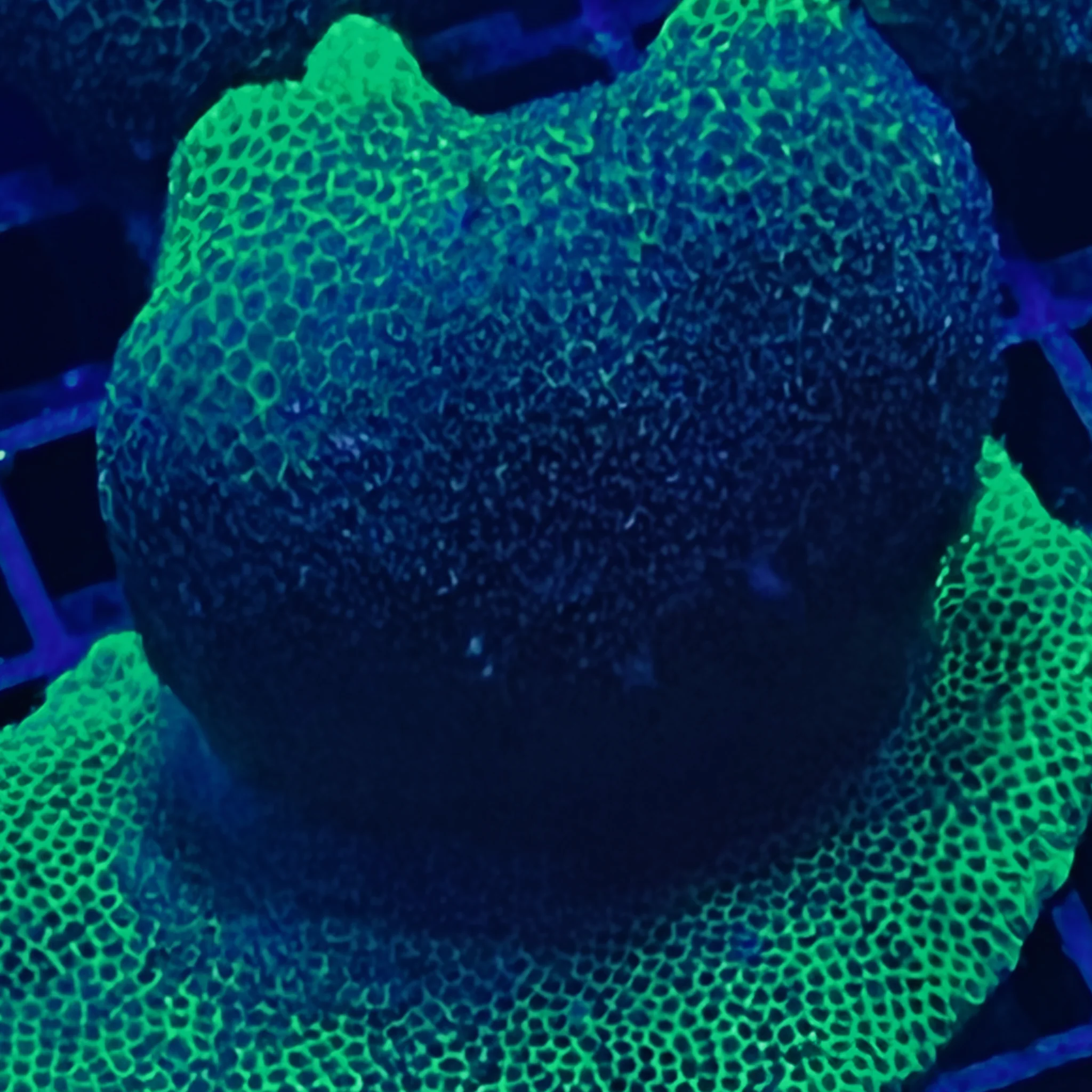
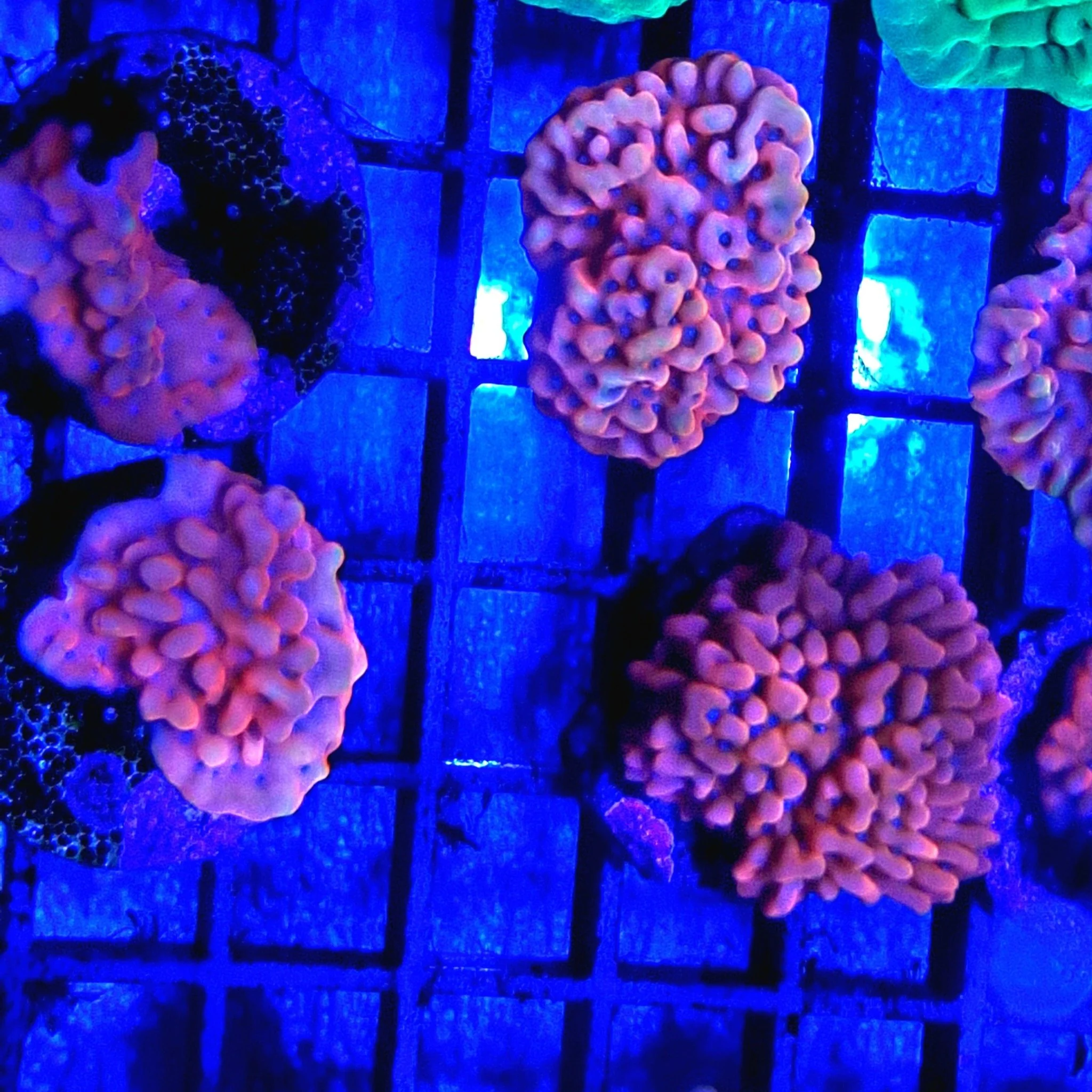
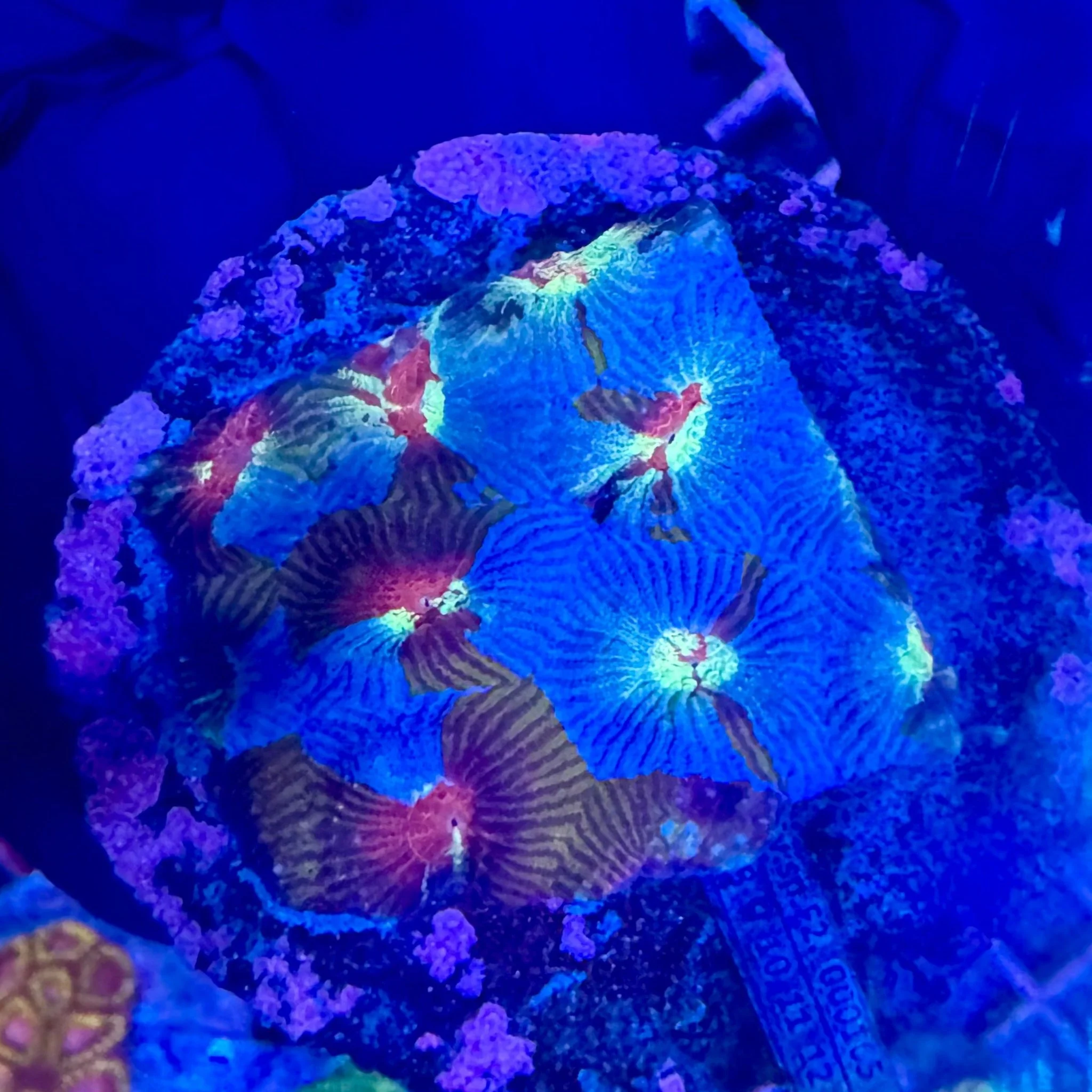
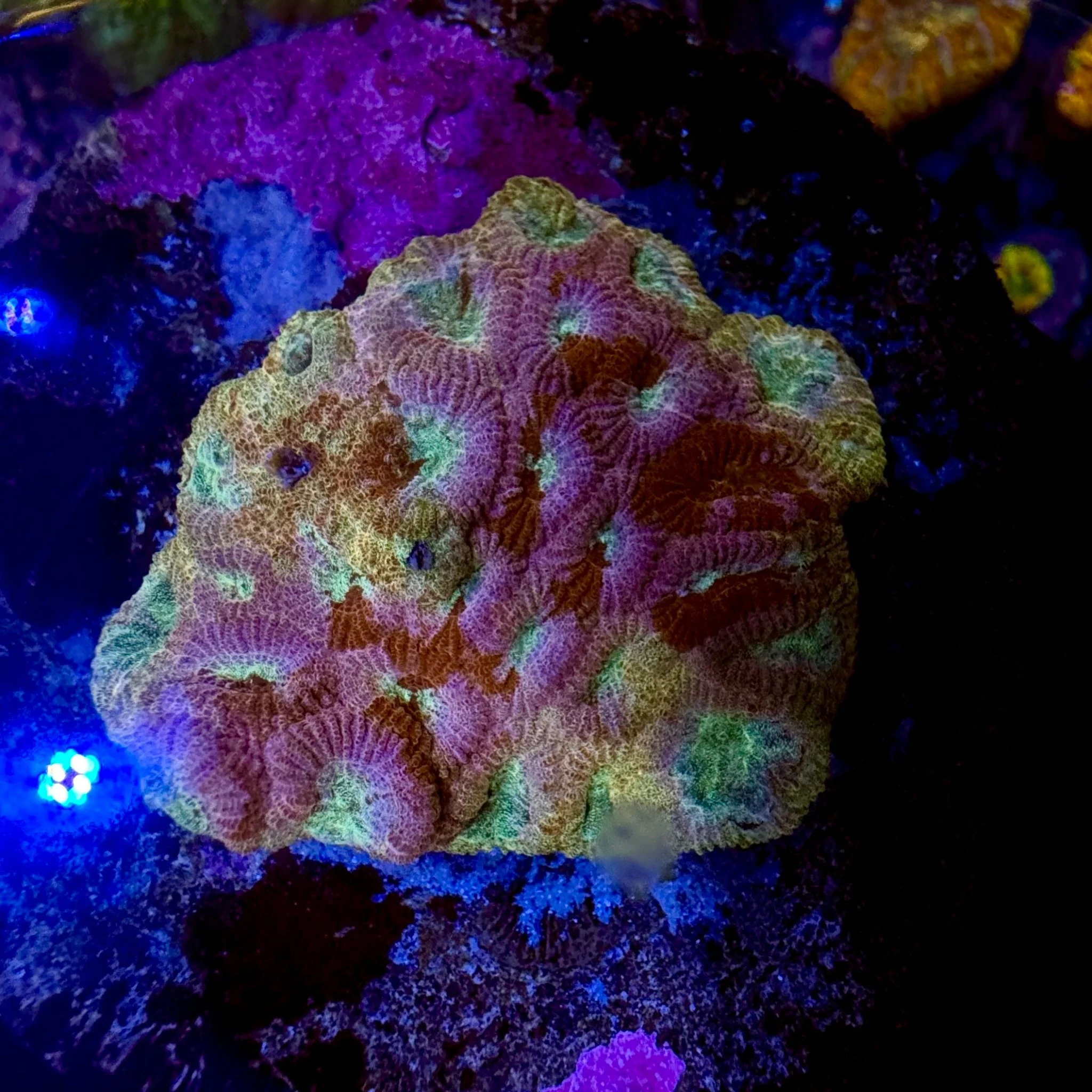
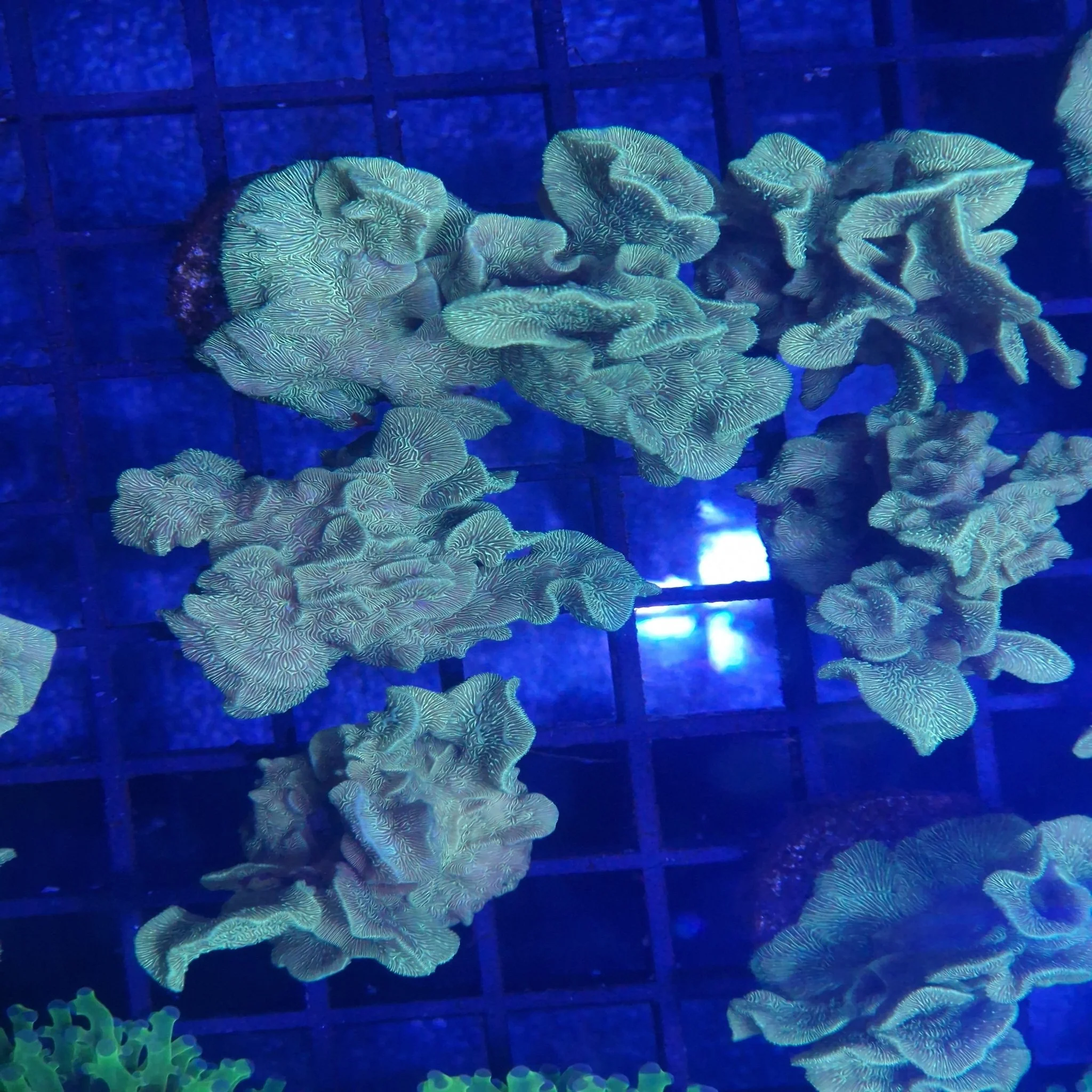
Green willsoni
Symphyllia wilsoni (now reclassified as Australophyllia wilsoni) is a highly sought-after Large Polyp Stony (LPS) coral known for its fleshy, vibrant, and multi-colored appearance. Often called the Aussie Meat Coral, it is an Indian Ocean endemic found primarily off the coast of Western Australia, uniquely sometimes growing near kelp forests.Key
CharacteristicsAppearance:
Features thick, ridged tissue with irregular valleys. It displays a wide range of mottled colors including neon greens, reds, purples, and blues.Rarity: While common in its specific habitat, it is considered uncommon and a premium "showpiece" in the aquarium hobby.
Classification: In 2016, it was moved from the genus Symphyllia to its own genus, Australophyllia, due to its unique skeletal structure and habitat.Aquarium Care GuideFor the best chance of success, this coral requires a stable environment and is generally suited for experienced reef keepers.
Lighting: Moderate lighting is preferred. Avoid overly bright, direct light which can stress the fleshy tissue.
Water Flow: Moderate to gentle indirect flow is ideal. High direct flow can cause tissue damage.
Temperature: This is a critical factor. There are "temperate" (cooler water, ~21–24°C) and "tropical" (warmer water, ~25–27°C) variants. Many hobbyists find success keeping them at a slightly cooler stable temperature, such as 75-77°F (24-25°C).Placement: Best placed in the lower sections of the tank on the sand bed or low rockwork to allow room for tissue expansion.
Aggression: They possess aggressive sweeper tentacles at night and can sting neighbouring corals; ensure ample space between them and other specimens.Feeding: They benefit from weekly targeted feedings of meaty foods like mysis shrimp or specialized LPS pellets to support tissue health.

Description
Symphyllia wilsoni (now reclassified as Australophyllia wilsoni) is a highly sought-after Large Polyp Stony (LPS) coral known for its fleshy, vibrant, and multi-colored appearance. Often called the Aussie Meat Coral, it is an Indian Ocean endemic found primarily off the coast of Western Australia, uniquely sometimes growing near kelp forests.Key
CharacteristicsAppearance:
Features thick, ridged tissue with irregular valleys. It displays a wide range of mottled colors including neon greens, reds, purples, and blues.Rarity: While common in its specific habitat, it is considered uncommon and a premium "showpiece" in the aquarium hobby.
Classification: In 2016, it was moved from the genus Symphyllia to its own genus, Australophyllia, due to its unique skeletal structure and habitat.Aquarium Care GuideFor the best chance of success, this coral requires a stable environment and is generally suited for experienced reef keepers.
Lighting: Moderate lighting is preferred. Avoid overly bright, direct light which can stress the fleshy tissue.
Water Flow: Moderate to gentle indirect flow is ideal. High direct flow can cause tissue damage.
Temperature: This is a critical factor. There are "temperate" (cooler water, ~21–24°C) and "tropical" (warmer water, ~25–27°C) variants. Many hobbyists find success keeping them at a slightly cooler stable temperature, such as 75-77°F (24-25°C).Placement: Best placed in the lower sections of the tank on the sand bed or low rockwork to allow room for tissue expansion.
Aggression: They possess aggressive sweeper tentacles at night and can sting neighbouring corals; ensure ample space between them and other specimens.Feeding: They benefit from weekly targeted feedings of meaty foods like mysis shrimp or specialized LPS pellets to support tissue health.