Sea Hare - Dolabrifera dolabrifera
Sea Hare (Dolabrifera dolabrifera)
The Sea Hare, Dolabrifera dolabrifera, is a fascinating marine algae-grazing mollusc with a flattened, soft body, mottled camouflage and a slow, deliberate crawling style. Also known as the Dappled Sea Hare, Warty Seacat or Common Sea Hare, this tropical and subtropical species is often valued for helping with nuisance algae in mature marine aquariums. It is peaceful and reef safe with caution, but it is a specialist animal that requires a steady natural food supply, stable water quality and protection from pumps and predatory tank mates.
Common Name:
Sea Hare, Dappled Sea Hare, Warty Seacat, Common Sea Hare, Sea Cat. Often incorrectly sold as a Sea Hare Nudibranch.
Scientific Name (Latin):
Dolabrifera dolabrifera
Maximum Size:
Usually around 10 cm, with recorded specimens up to approximately 10.8 cm.
Water Type:
Marine
Origin / Natural Habitat:
Found in tropical and subtropical marine waters, including Indo-Pacific and other warm ocean regions. Naturally associated with shallow intertidal and nearshore habitats such as tide pools, rocky flats, boulder areas, algae-covered rock, rubble and reef margins. It often shelters in cracks, under rocks or among algae where its mottled colouration provides strong camouflage.
Water Parameters:
Temperature: 24–27°C
pH Range: 8.1–8.4
Hardness or Salinity: SG 1.023–1.025
Temperament:
Very peaceful. It will not bother fish, corals or most invertebrates, but it is vulnerable to predatory or nipping tank mates. Avoid housing with triggers, puffers, large wrasses, hawkfish, aggressive crabs, large hermit crabs or animals likely to bite soft-bodied molluscs.
Diet:
Herbivorous grazer. In the aquarium, it feeds mainly on soft algae films, nuisance algae, microalgae and natural growth on rockwork and hard surfaces. It should only be added to aquariums with enough established algae to support it. Once visible algae is depleted, supplemental feeding may be difficult and should include marine algae sheets, suitable macroalgae or algae-based foods placed where the animal can find them, although acceptance varies.
Minimum Tank Size:
A minimum of 150 litres is recommended for a single specimen, with larger mature aquariums preferred. Tank size is less important than the availability of safe grazing surfaces, stable water quality and enough algae to prevent starvation.
Behaviour & Activity:
A slow-moving, mostly grazing mollusc that crawls over rockwork, glass and algae-covered surfaces. It may be more active during quieter periods and can be difficult to spot because of its camouflage. It uses a broad foot to grip rockwork and can squeeze into crevices or beneath ledges. Protect pump intakes, wavemakers and overflow slots, as soft-bodied sea hares can be badly injured if drawn into equipment.
Reef Safe:
Reef Safe with Caution
Generally safe with corals, snails, cleaner shrimps and most peaceful reef inhabitants. The caution is due to husbandry rather than coral damage: it can starve once algae is exhausted, may be injured by pumps, and may release defensive compounds if severely stressed or damaged. Good filtration, carbon use and prompt removal of a dead or deteriorating specimen are sensible precautions.
Special Requirements or Care Notes:
Requires a mature aquarium with established algae growth and very stable salinity. Like other marine invertebrates, it is sensitive to copper, sudden salinity changes and poor acclimation, so slow acclimation is important. Do not expose to copper-based treatments. Avoid adding to ultra-clean systems with little algae. If the sea hare clears the available algae, it may need to be moved to another suitable mature system or carefully supported with appropriate algae foods. Cover pumps and avoid rough handling.
Suitable for:
Experienced fishkeepers
Availability:
Occasional in trade
All images are a visual representation of the animal you will receive, made to be as accurate as possible. Please note that Mother Nature is a wonderful thing, and variation in patterns and colours will occur — that is part of the unique beauty of these animals.
Original: $33.63
-65%$33.63
$11.77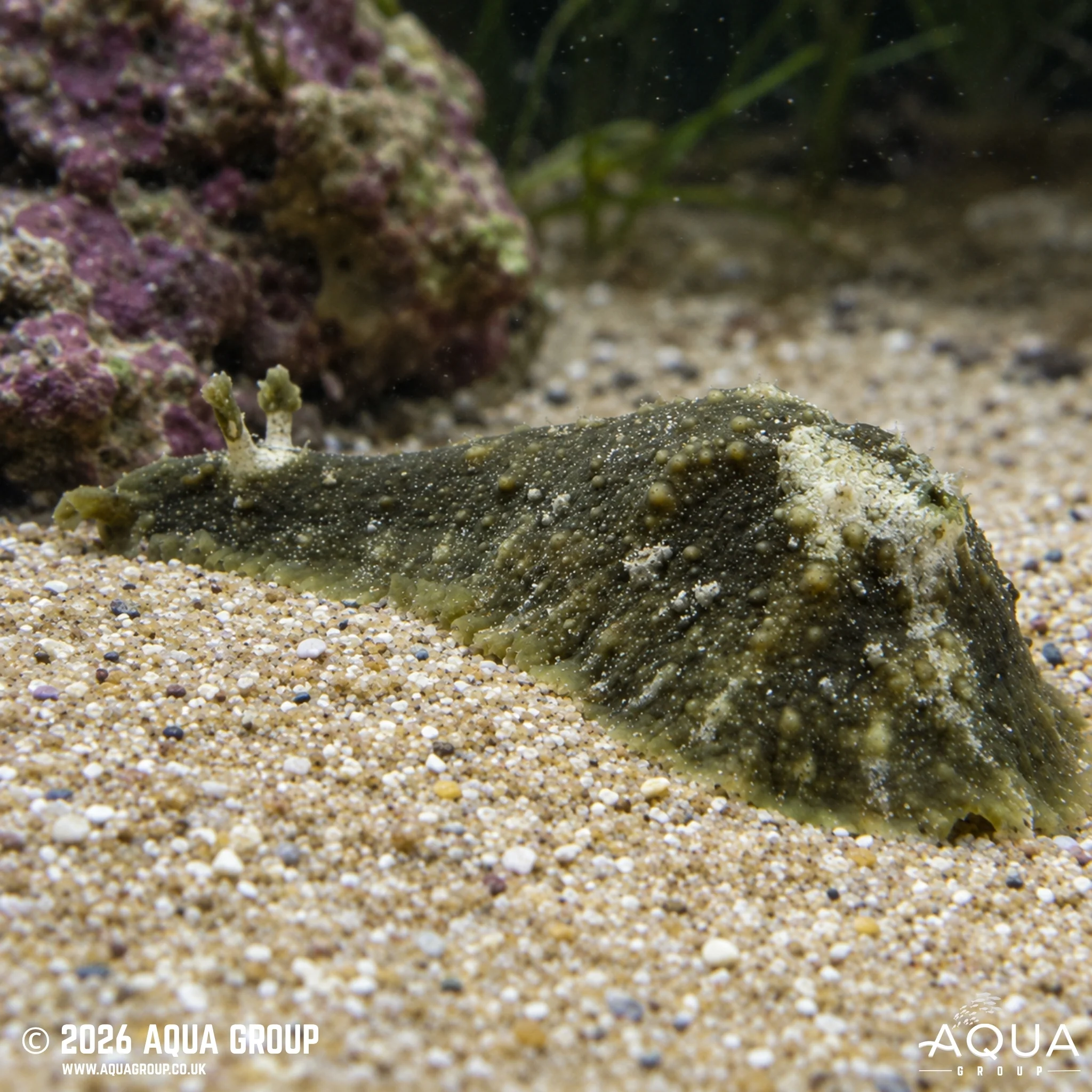
Description
Sea Hare (Dolabrifera dolabrifera)
The Sea Hare, Dolabrifera dolabrifera, is a fascinating marine algae-grazing mollusc with a flattened, soft body, mottled camouflage and a slow, deliberate crawling style. Also known as the Dappled Sea Hare, Warty Seacat or Common Sea Hare, this tropical and subtropical species is often valued for helping with nuisance algae in mature marine aquariums. It is peaceful and reef safe with caution, but it is a specialist animal that requires a steady natural food supply, stable water quality and protection from pumps and predatory tank mates.
Common Name:
Sea Hare, Dappled Sea Hare, Warty Seacat, Common Sea Hare, Sea Cat. Often incorrectly sold as a Sea Hare Nudibranch.
Scientific Name (Latin):
Dolabrifera dolabrifera
Maximum Size:
Usually around 10 cm, with recorded specimens up to approximately 10.8 cm.
Water Type:
Marine
Origin / Natural Habitat:
Found in tropical and subtropical marine waters, including Indo-Pacific and other warm ocean regions. Naturally associated with shallow intertidal and nearshore habitats such as tide pools, rocky flats, boulder areas, algae-covered rock, rubble and reef margins. It often shelters in cracks, under rocks or among algae where its mottled colouration provides strong camouflage.
Water Parameters:
Temperature: 24–27°C
pH Range: 8.1–8.4
Hardness or Salinity: SG 1.023–1.025
Temperament:
Very peaceful. It will not bother fish, corals or most invertebrates, but it is vulnerable to predatory or nipping tank mates. Avoid housing with triggers, puffers, large wrasses, hawkfish, aggressive crabs, large hermit crabs or animals likely to bite soft-bodied molluscs.
Diet:
Herbivorous grazer. In the aquarium, it feeds mainly on soft algae films, nuisance algae, microalgae and natural growth on rockwork and hard surfaces. It should only be added to aquariums with enough established algae to support it. Once visible algae is depleted, supplemental feeding may be difficult and should include marine algae sheets, suitable macroalgae or algae-based foods placed where the animal can find them, although acceptance varies.
Minimum Tank Size:
A minimum of 150 litres is recommended for a single specimen, with larger mature aquariums preferred. Tank size is less important than the availability of safe grazing surfaces, stable water quality and enough algae to prevent starvation.
Behaviour & Activity:
A slow-moving, mostly grazing mollusc that crawls over rockwork, glass and algae-covered surfaces. It may be more active during quieter periods and can be difficult to spot because of its camouflage. It uses a broad foot to grip rockwork and can squeeze into crevices or beneath ledges. Protect pump intakes, wavemakers and overflow slots, as soft-bodied sea hares can be badly injured if drawn into equipment.
Reef Safe:
Reef Safe with Caution
Generally safe with corals, snails, cleaner shrimps and most peaceful reef inhabitants. The caution is due to husbandry rather than coral damage: it can starve once algae is exhausted, may be injured by pumps, and may release defensive compounds if severely stressed or damaged. Good filtration, carbon use and prompt removal of a dead or deteriorating specimen are sensible precautions.
Special Requirements or Care Notes:
Requires a mature aquarium with established algae growth and very stable salinity. Like other marine invertebrates, it is sensitive to copper, sudden salinity changes and poor acclimation, so slow acclimation is important. Do not expose to copper-based treatments. Avoid adding to ultra-clean systems with little algae. If the sea hare clears the available algae, it may need to be moved to another suitable mature system or carefully supported with appropriate algae foods. Cover pumps and avoid rough handling.
Suitable for:
Experienced fishkeepers
Availability:
Occasional in trade
All images are a visual representation of the animal you will receive, made to be as accurate as possible. Please note that Mother Nature is a wonderful thing, and variation in patterns and colours will occur — that is part of the unique beauty of these animals.