Frostbite Clownfish (Amphiprion ocellaris)
Frostbite Clownfish (Amphiprion ocellaris)
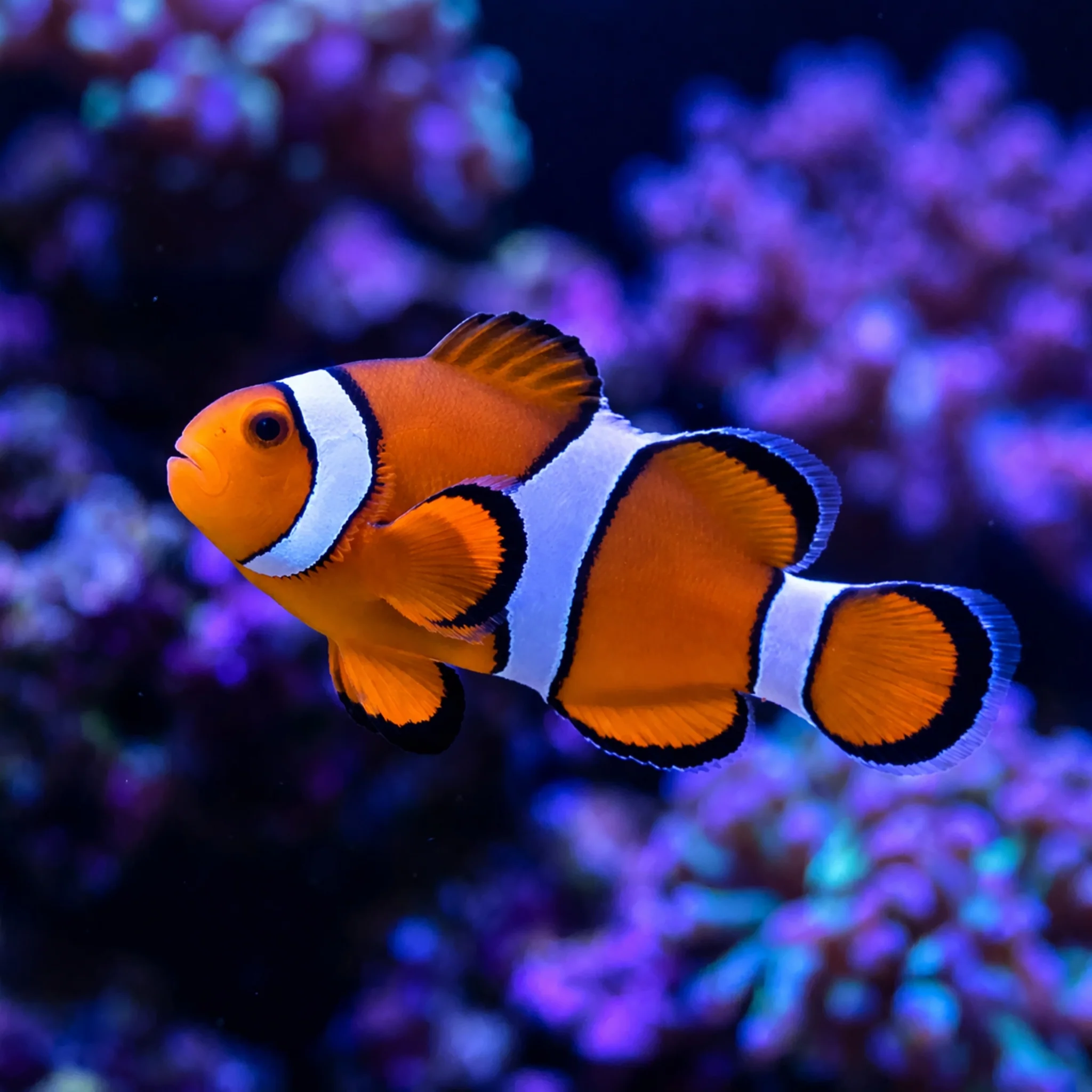
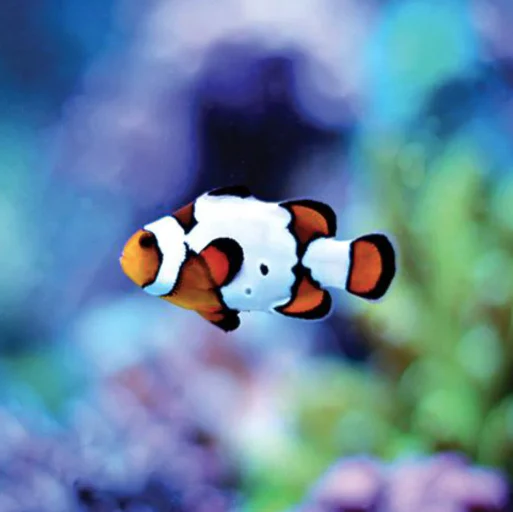
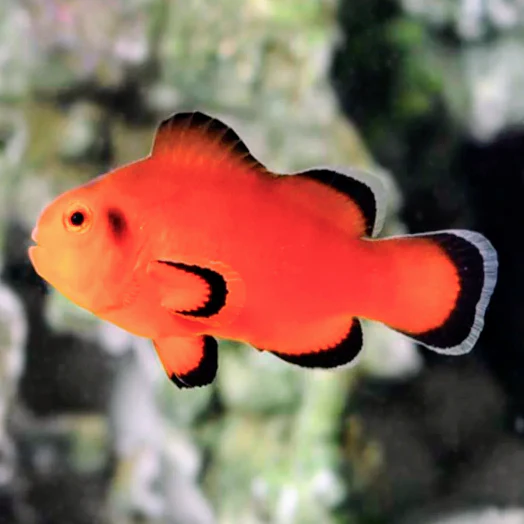
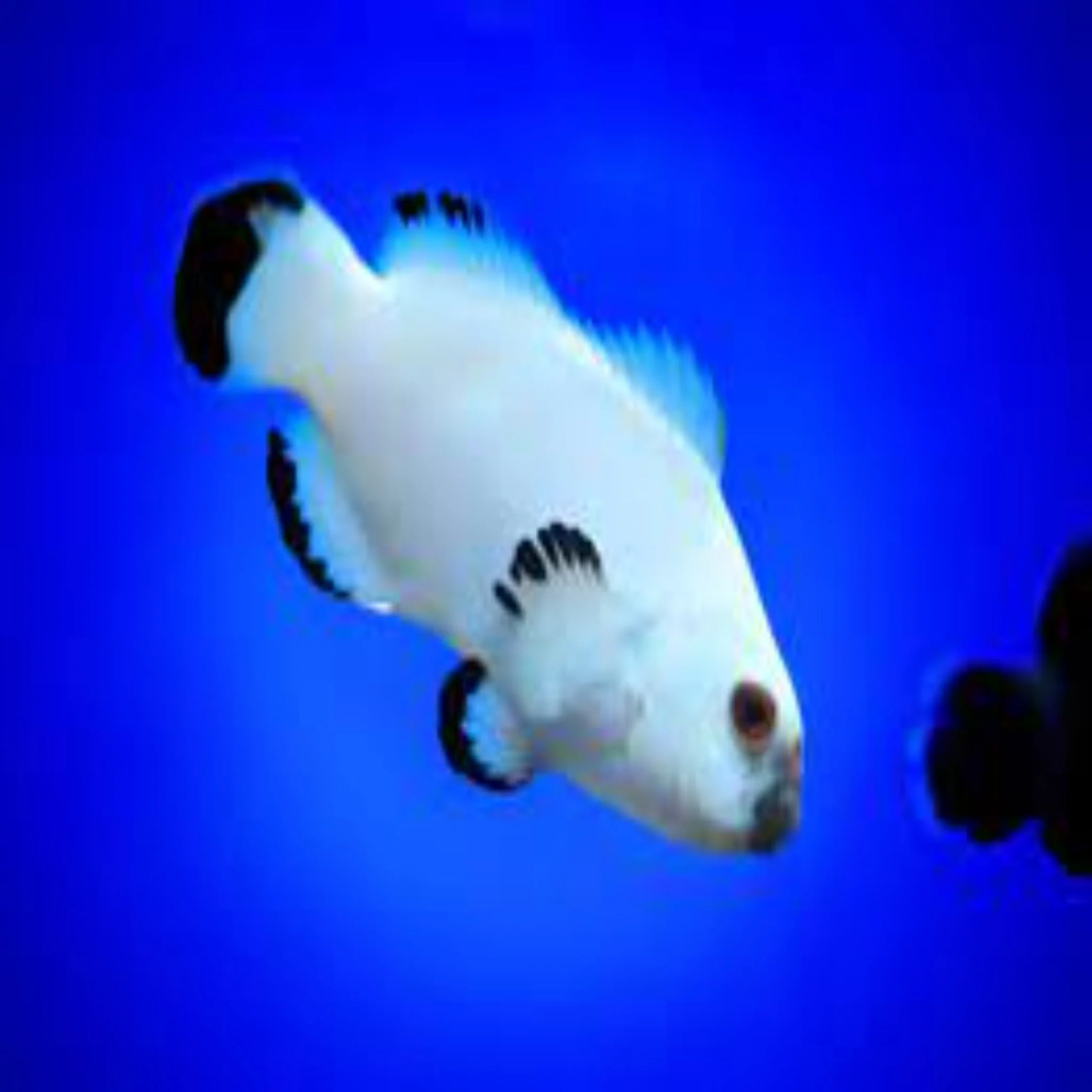
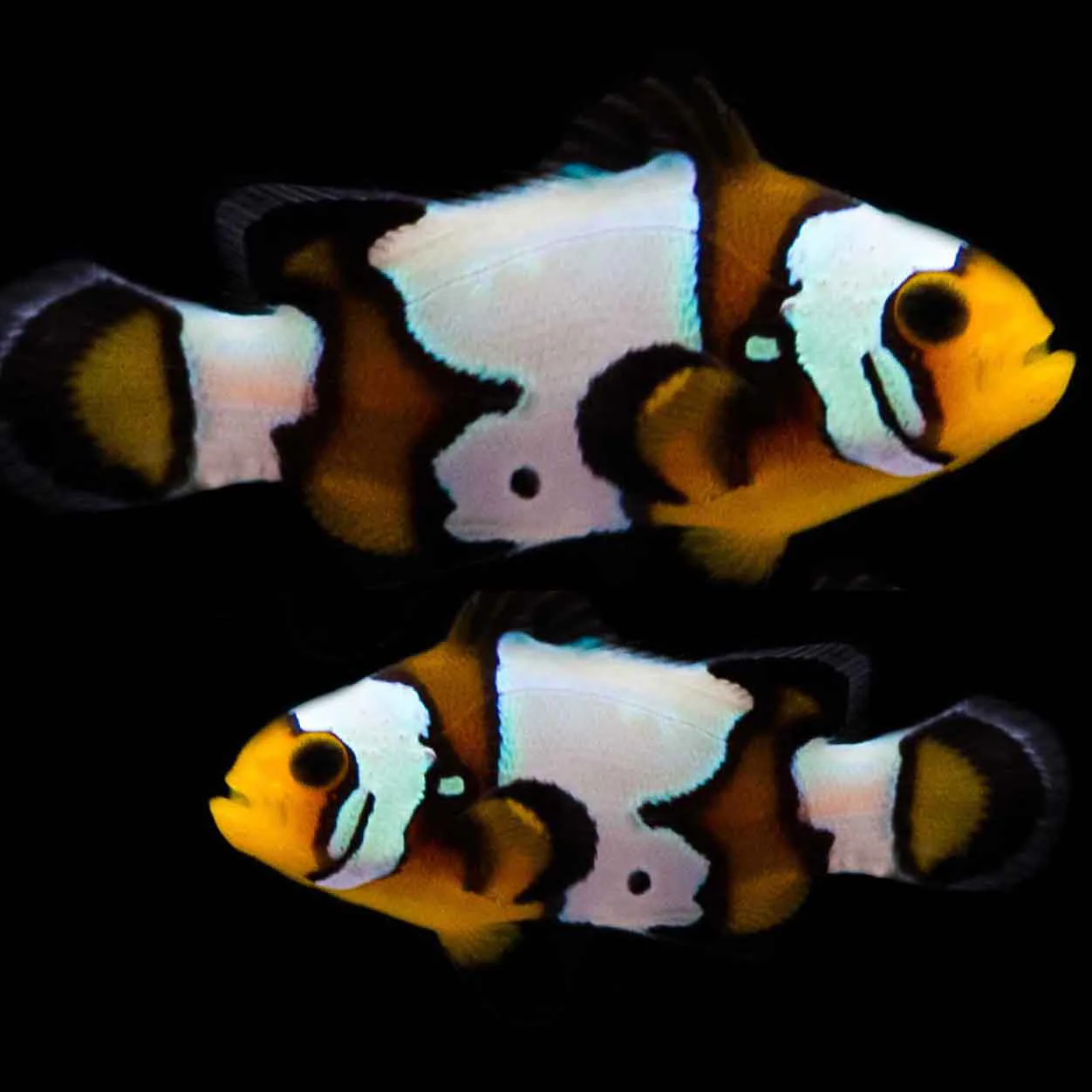
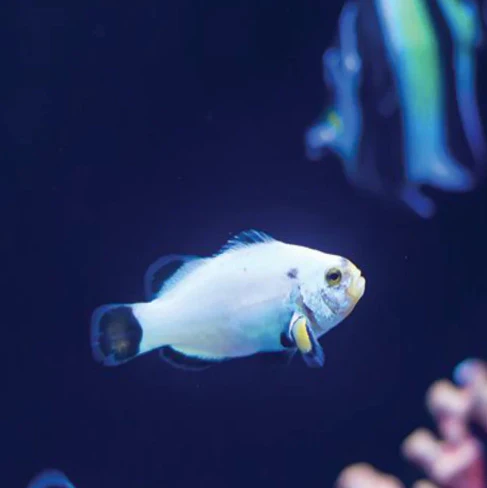
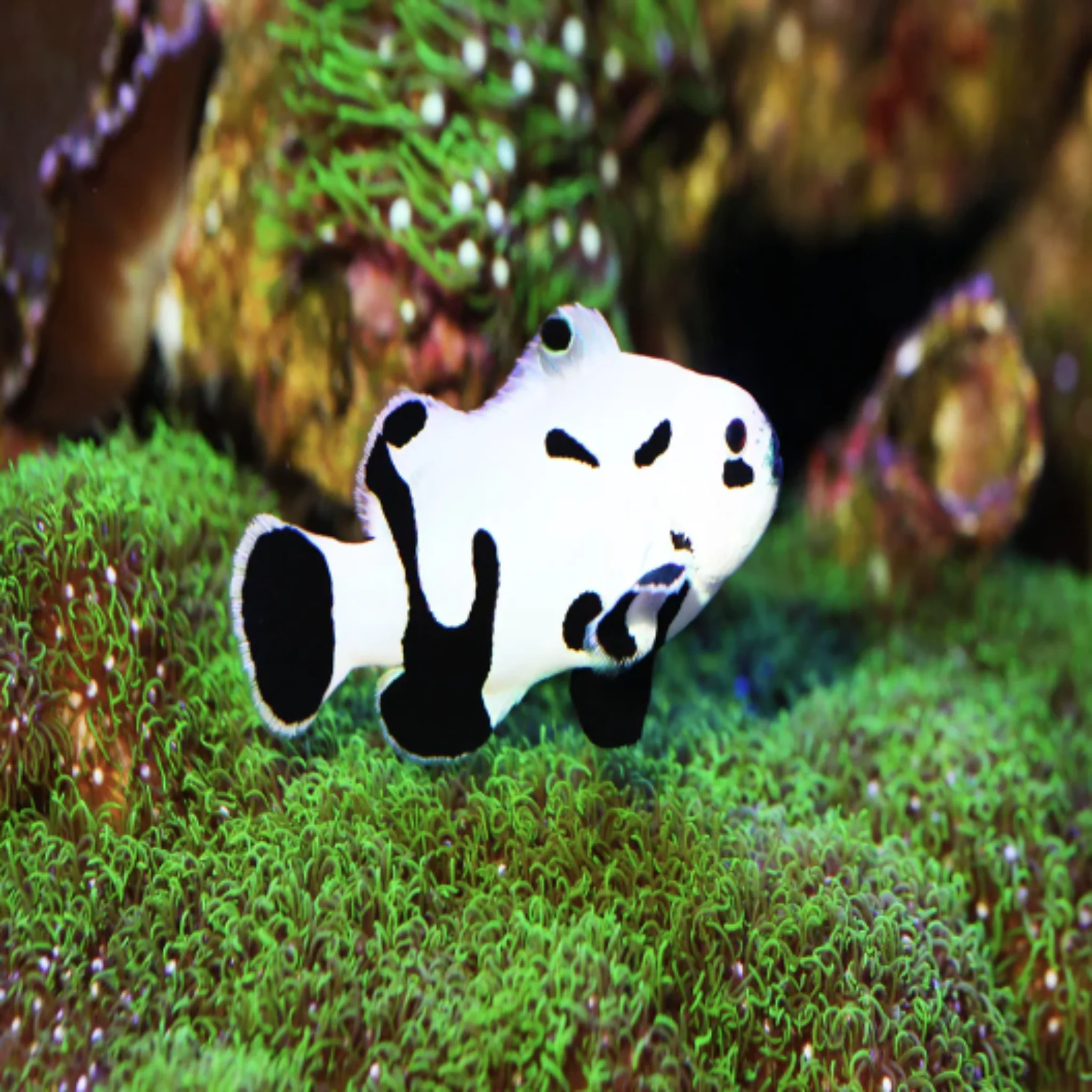
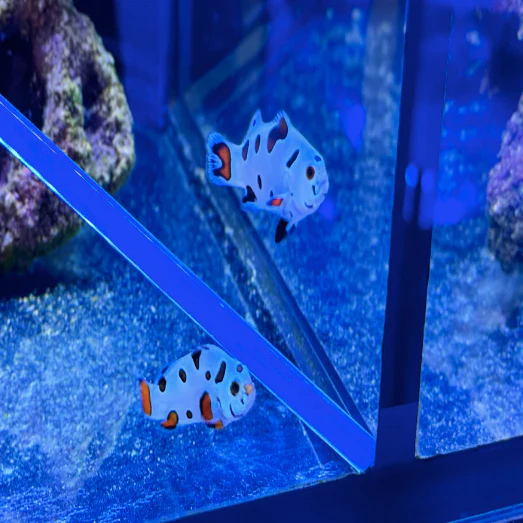
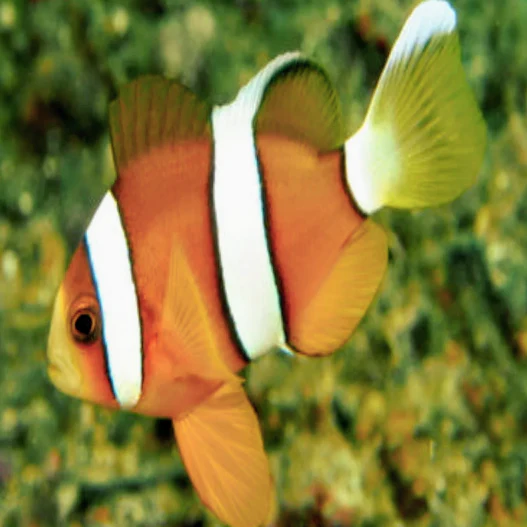
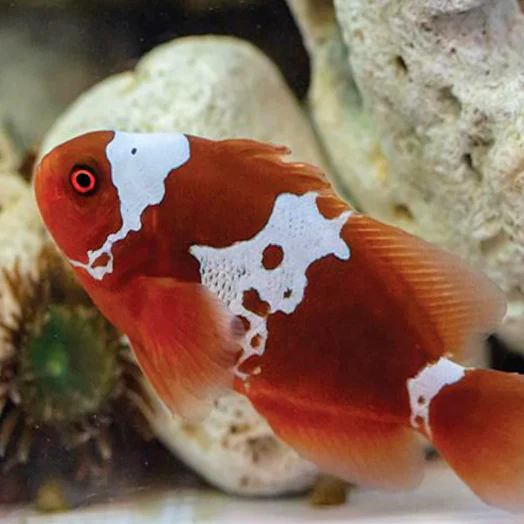
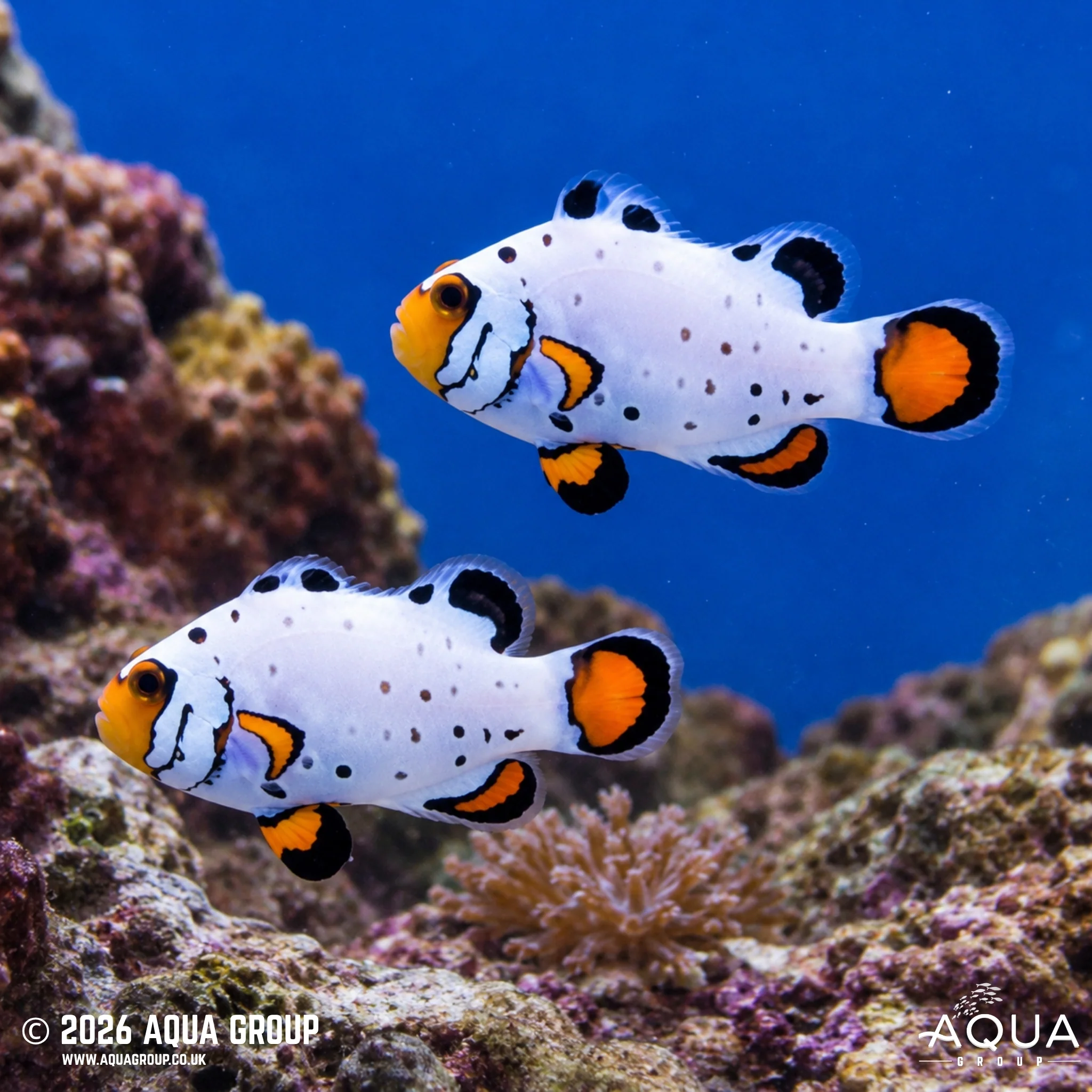
The Frostbite Clownfish, Amphiprion ocellaris, is a captive-bred designer form of the popular Ocellaris Clownfish, admired for its frosted white body pattern, orange facial and fin colouration, and dark edging that often becomes more defined with age. This hardy marine clownfish is closely related to the classic Common Clownfish and False Percula Clownfish, but has been selectively bred for its distinctive “frostbite” markings. Peaceful by clownfish standards, reef safe and well suited to stable marine aquariums, it makes an excellent choice for aquarists wanting a colourful, captive-bred centrepiece fish.
Common Name:
Frostbite Clownfish, Frostbite Clown, Frostbite Ocellaris Clownfish, Designer Ocellaris Clownfish, Captive-bred Frostbite Clownfish.
Scientific Name (Latin):
Amphiprion ocellaris
Captive-bred “Frostbite” variety.
Maximum Size:
Usually around 8–9 cm in aquariums, with the wild Ocellaris Clownfish reaching up to around 11 cm.
Water Type:
Marine
Origin / Natural Habitat:
The Frostbite Clownfish is a captive-bred designer variety and does not occur as a wild locality form. The wild species, Amphiprion ocellaris, is native to the Indo-West Pacific, including the eastern Indian Ocean, Andaman and Nicobar Islands, Thailand, Malaysia, Indonesia, the Philippines, northwest Australia, Singapore, Taiwan and the Ryukyu Islands. In nature, Ocellaris Clownfish live on coral reefs and in calm shallow lagoons, closely associated with host sea anemones.
Water Parameters:
Temperature: 24–27°C
pH Range: 8.1–8.4
Hardness or Salinity: SG 1.020–1.025
Temperament:
Generally peaceful to semi-territorial. Frostbite Clownfish are usually less aggressive than larger clownfish such as Maroon Clownfish, but they may defend a chosen rock, coral, corner of the aquarium or host anemone, especially as a bonded pair or during breeding.
Diet:
Omnivorous. In the wild, Ocellaris Clownfish feed on zooplankton, small crustaceans and some algae-based material. In the aquarium, offer quality marine pellets, flakes, frozen mysis, enriched brineshrimp, copepods, finely chopped seafood and occasional spirulina or algae-based foods. Captive-bred specimens usually accept prepared foods readily.
Minimum Tank Size:
A minimum of 90 litres is recommended for a single specimen or bonded pair, with larger aquariums preferred for mixed reef communities. Provide rockwork, sheltered areas and moderate water movement.
Behaviour & Activity:
A bold, site-attached clownfish that often chooses a favourite area of rockwork, coral, anemone or aquarium corner and spends much of its time nearby. It does not require a host anemone to thrive, but may accept suitable anemones or sometimes adopt corals such as Euphyllia-style corals as a substitute. Captive-bred Frostbite Clownfish are usually confident, visible and active during the day. Like other clownfish, they form a size-based hierarchy, with the larger individual becoming female in a pair.
Reef Safe:
Reef Safe
Generally safe with corals, snails, hermit crabs, cleaner shrimps and most ornamental invertebrates. The caution is mainly behavioural: a clownfish may irritate corals if it adopts them as a host, may move small amounts of sand around its territory, and may become defensive towards nearby fish or the aquarist’s hand once mature or breeding.
Special Requirements or Care Notes:
Captive-bred Frostbite Clownfish are typically hardy and aquarium-adapted, making them a better choice than many wild-caught marine fish. Keep singly or as a compatible pair; avoid mixing with other clownfish species in smaller aquariums. A host anemone is optional and should only be added to mature, well-lit aquariums with stable water quality. Pattern and colour vary between individuals, and black edging or spotting may become more pronounced as the fish grows.
Suitable for:
Beginner to intermediate fishkeepers
Availability:
Captive-bred / Common in trade
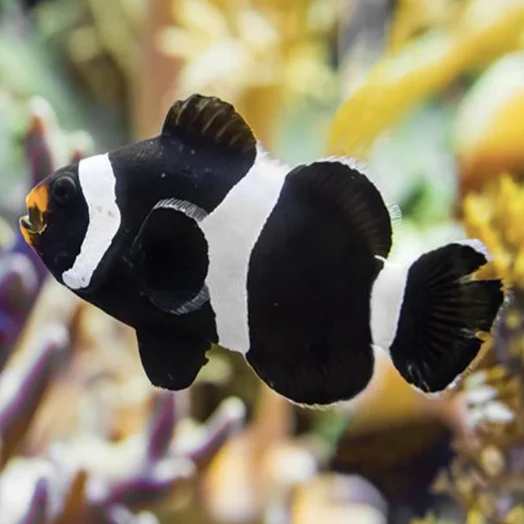
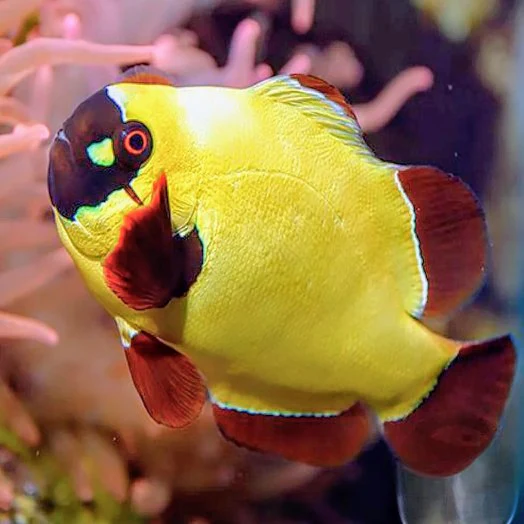
All images are a visual representation of the fish you will receive, made to be as accurate as possible. Please note that Mother Nature is a wonderful thing, and variation in patterns and colours will occur — that is part of the unique beauty of these animals.
Original: $80.72
-65%$80.72
$28.25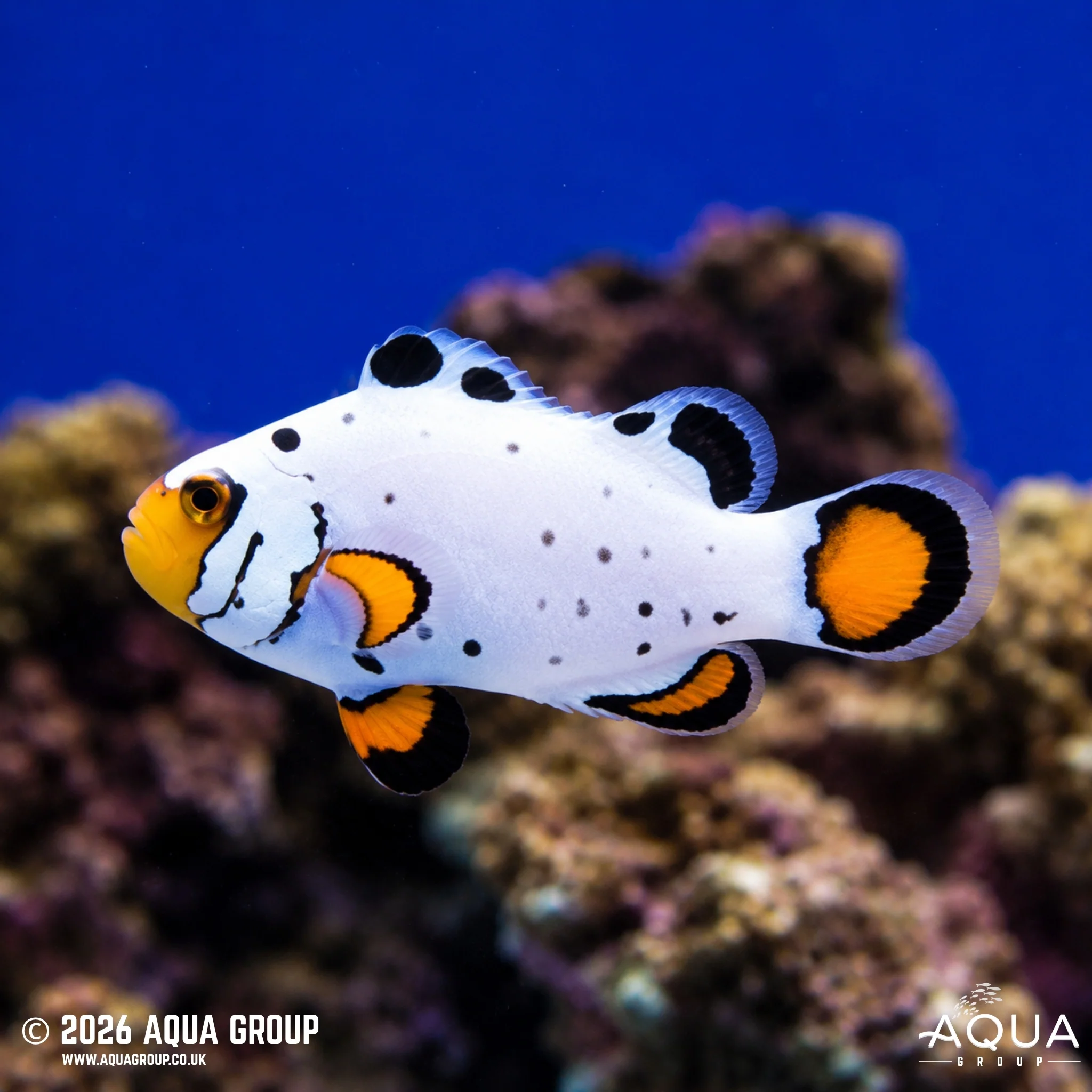
Description
Frostbite Clownfish (Amphiprion ocellaris)
The Frostbite Clownfish, Amphiprion ocellaris, is a captive-bred designer form of the popular Ocellaris Clownfish, admired for its frosted white body pattern, orange facial and fin colouration, and dark edging that often becomes more defined with age. This hardy marine clownfish is closely related to the classic Common Clownfish and False Percula Clownfish, but has been selectively bred for its distinctive “frostbite” markings. Peaceful by clownfish standards, reef safe and well suited to stable marine aquariums, it makes an excellent choice for aquarists wanting a colourful, captive-bred centrepiece fish.
Common Name:
Frostbite Clownfish, Frostbite Clown, Frostbite Ocellaris Clownfish, Designer Ocellaris Clownfish, Captive-bred Frostbite Clownfish.
Scientific Name (Latin):
Amphiprion ocellaris
Captive-bred “Frostbite” variety.
Maximum Size:
Usually around 8–9 cm in aquariums, with the wild Ocellaris Clownfish reaching up to around 11 cm.
Water Type:
Marine
Origin / Natural Habitat:
The Frostbite Clownfish is a captive-bred designer variety and does not occur as a wild locality form. The wild species, Amphiprion ocellaris, is native to the Indo-West Pacific, including the eastern Indian Ocean, Andaman and Nicobar Islands, Thailand, Malaysia, Indonesia, the Philippines, northwest Australia, Singapore, Taiwan and the Ryukyu Islands. In nature, Ocellaris Clownfish live on coral reefs and in calm shallow lagoons, closely associated with host sea anemones.
Water Parameters:
Temperature: 24–27°C
pH Range: 8.1–8.4
Hardness or Salinity: SG 1.020–1.025
Temperament:
Generally peaceful to semi-territorial. Frostbite Clownfish are usually less aggressive than larger clownfish such as Maroon Clownfish, but they may defend a chosen rock, coral, corner of the aquarium or host anemone, especially as a bonded pair or during breeding.
Diet:
Omnivorous. In the wild, Ocellaris Clownfish feed on zooplankton, small crustaceans and some algae-based material. In the aquarium, offer quality marine pellets, flakes, frozen mysis, enriched brineshrimp, copepods, finely chopped seafood and occasional spirulina or algae-based foods. Captive-bred specimens usually accept prepared foods readily.
Minimum Tank Size:
A minimum of 90 litres is recommended for a single specimen or bonded pair, with larger aquariums preferred for mixed reef communities. Provide rockwork, sheltered areas and moderate water movement.
Behaviour & Activity:
A bold, site-attached clownfish that often chooses a favourite area of rockwork, coral, anemone or aquarium corner and spends much of its time nearby. It does not require a host anemone to thrive, but may accept suitable anemones or sometimes adopt corals such as Euphyllia-style corals as a substitute. Captive-bred Frostbite Clownfish are usually confident, visible and active during the day. Like other clownfish, they form a size-based hierarchy, with the larger individual becoming female in a pair.
Reef Safe:
Reef Safe
Generally safe with corals, snails, hermit crabs, cleaner shrimps and most ornamental invertebrates. The caution is mainly behavioural: a clownfish may irritate corals if it adopts them as a host, may move small amounts of sand around its territory, and may become defensive towards nearby fish or the aquarist’s hand once mature or breeding.
Special Requirements or Care Notes:
Captive-bred Frostbite Clownfish are typically hardy and aquarium-adapted, making them a better choice than many wild-caught marine fish. Keep singly or as a compatible pair; avoid mixing with other clownfish species in smaller aquariums. A host anemone is optional and should only be added to mature, well-lit aquariums with stable water quality. Pattern and colour vary between individuals, and black edging or spotting may become more pronounced as the fish grows.
Suitable for:
Beginner to intermediate fishkeepers
Availability:
Captive-bred / Common in trade
All images are a visual representation of the fish you will receive, made to be as accurate as possible. Please note that Mother Nature is a wonderful thing, and variation in patterns and colours will occur — that is part of the unique beauty of these animals.