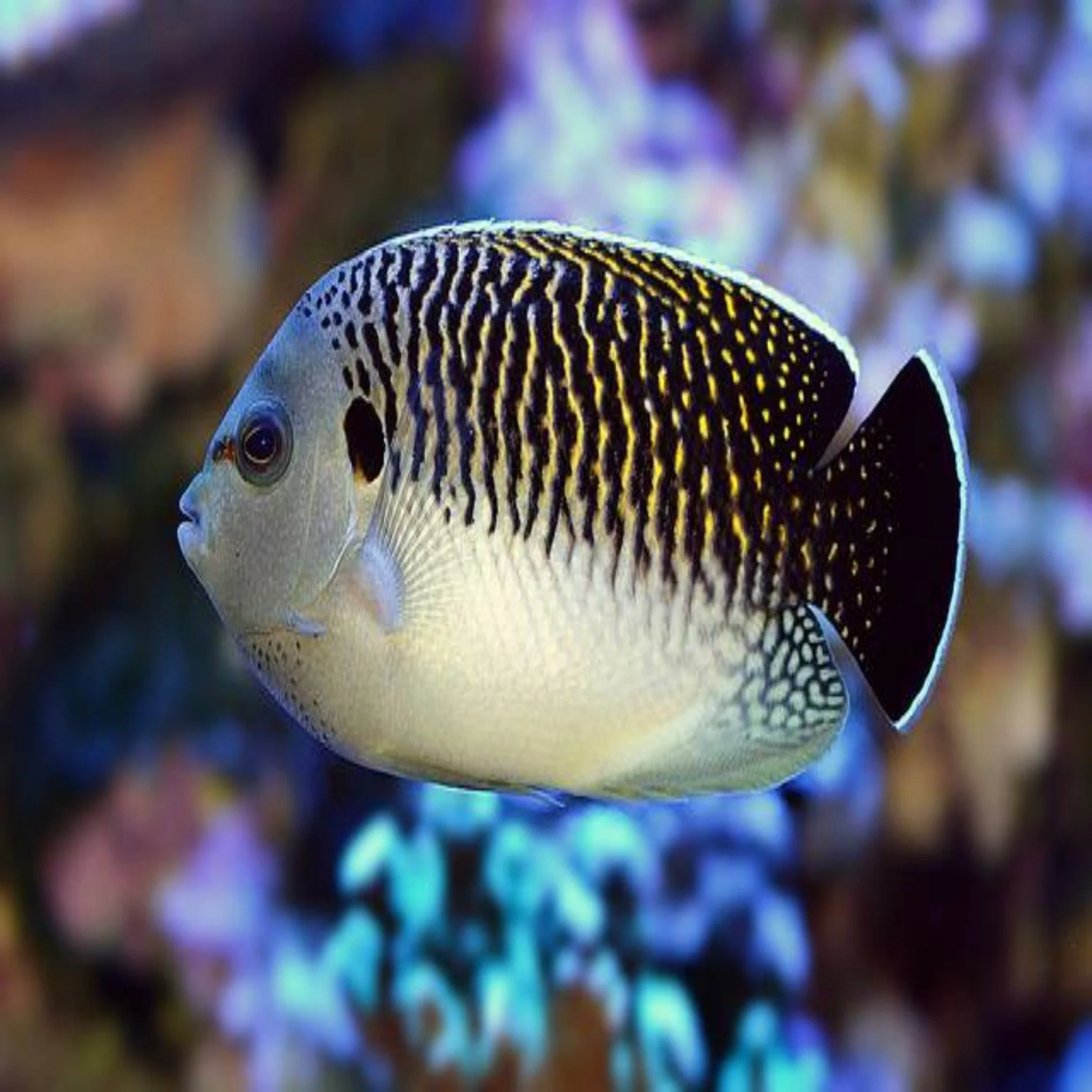
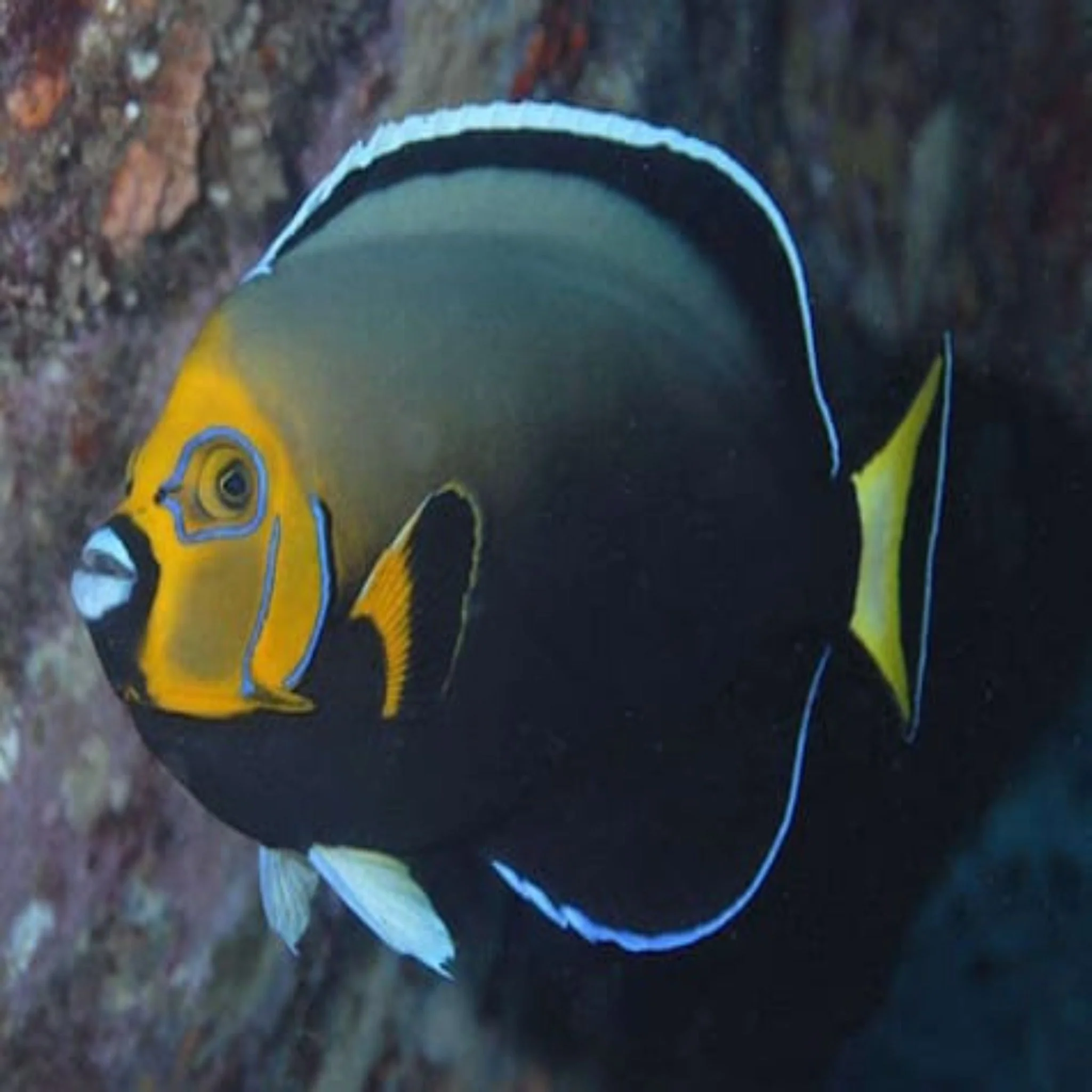
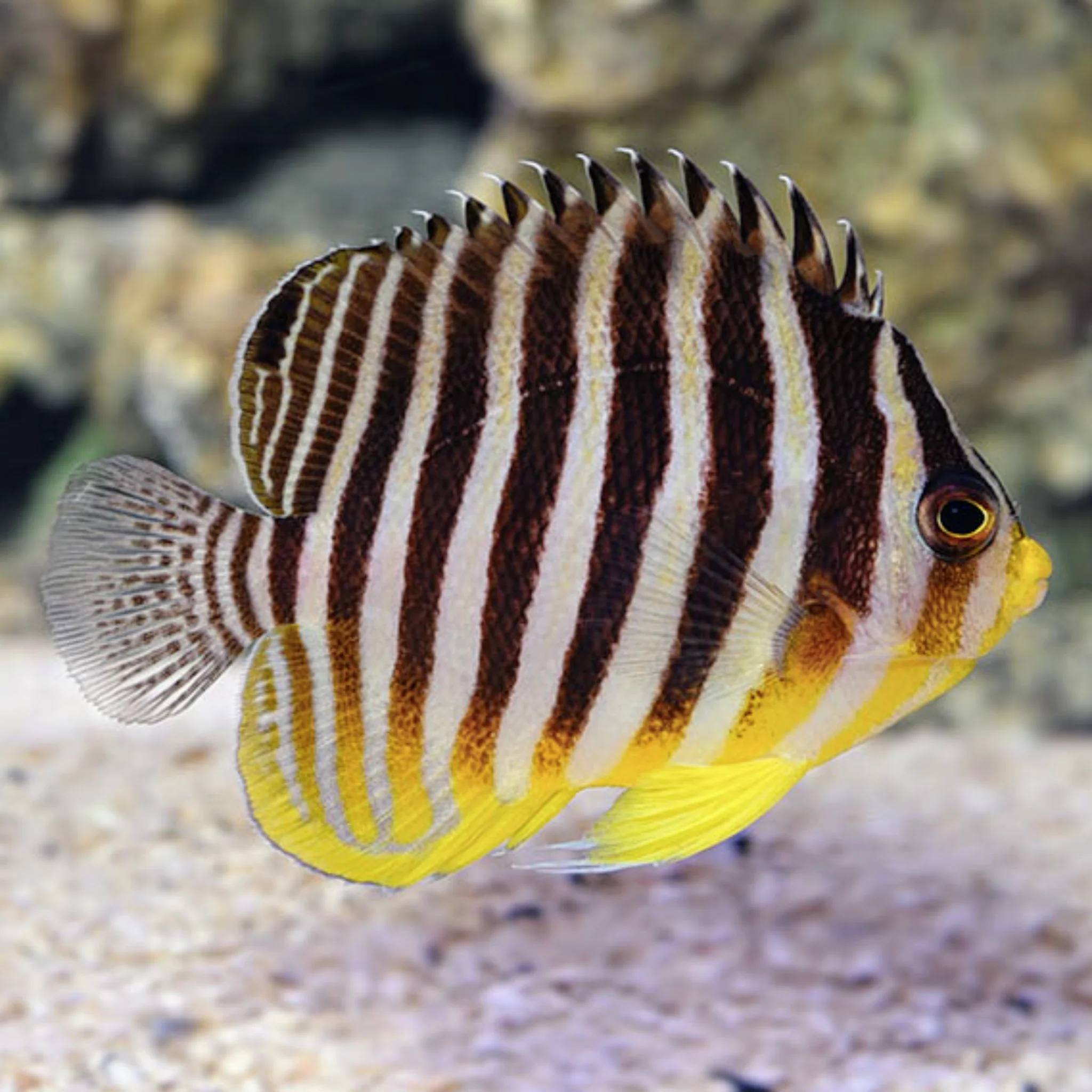
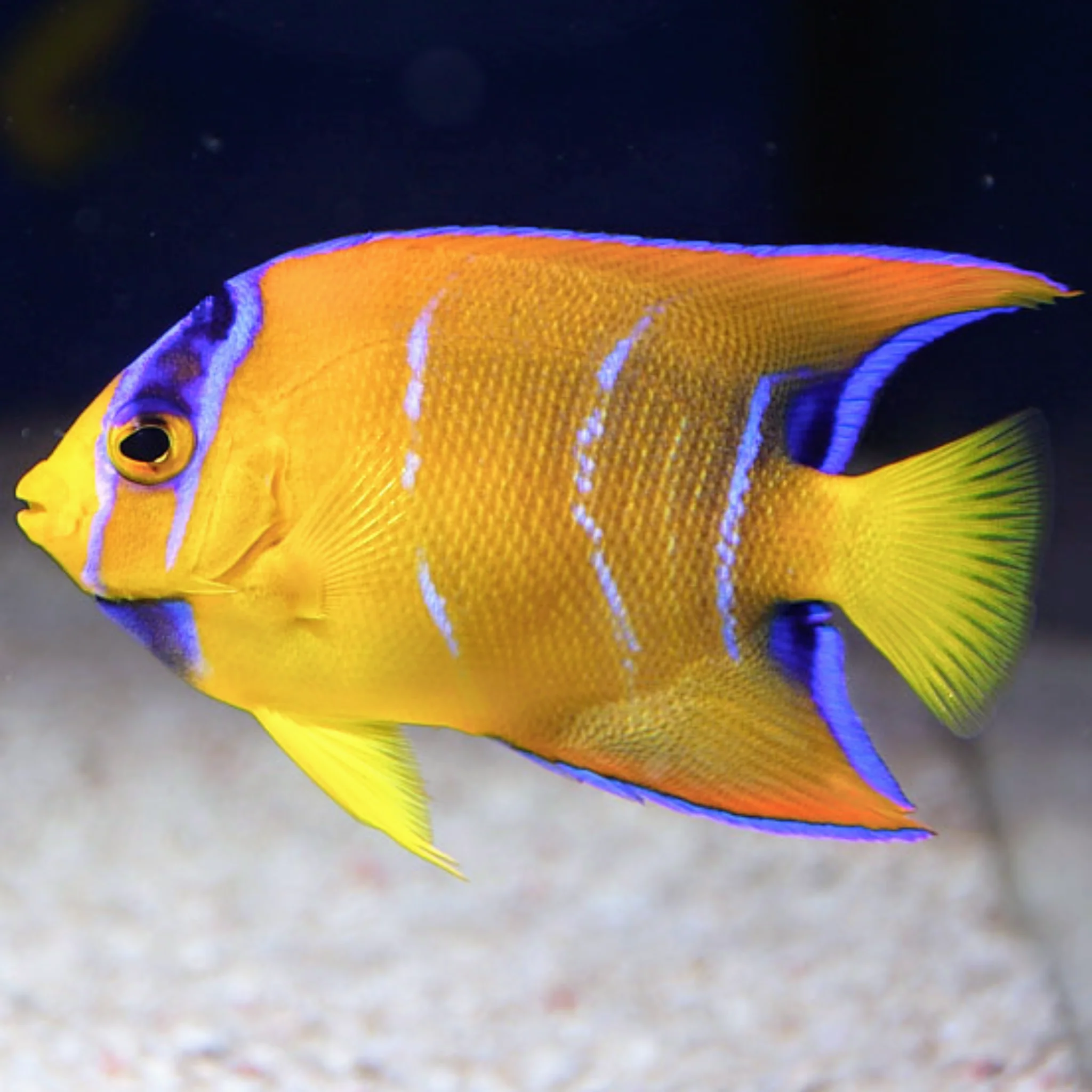
Lamarck Angel -Genicanthus lamarck
Lamarck’s Angelfish (Genicanthus lamarck)
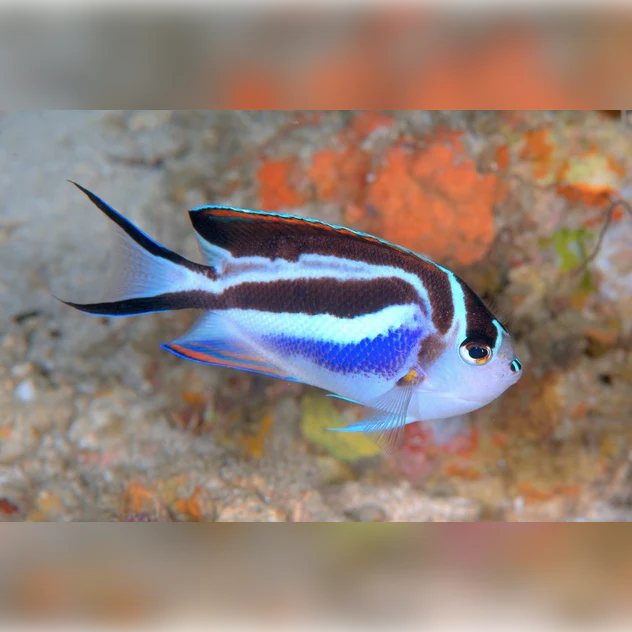
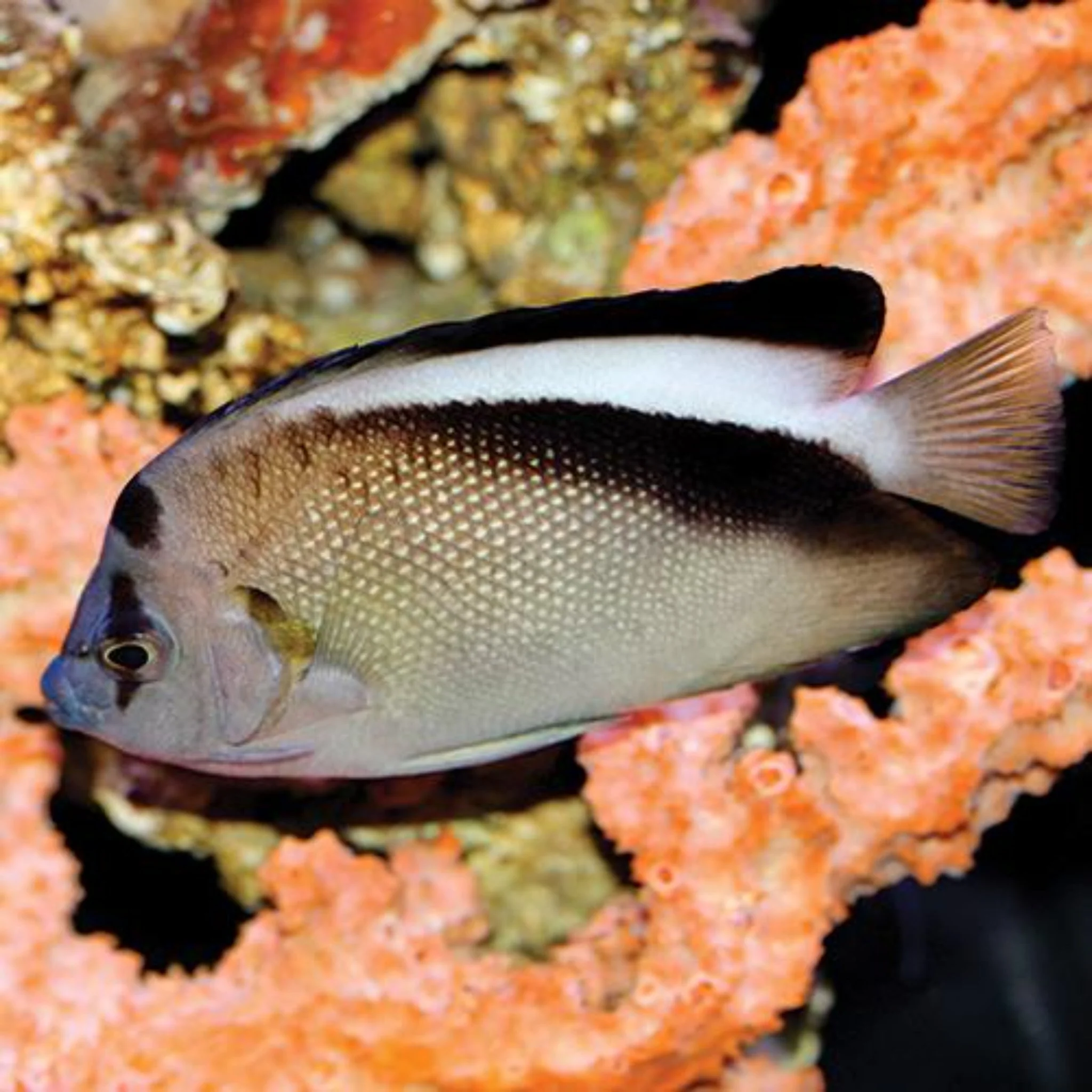
Lamarck’s Angelfish, Genicanthus lamarck, is a graceful and reef-suitable marine angelfish with a pale silver-white body, bold black horizontal striping and elegant swallowtail-style finnage. Also known as the Blackstriped Angelfish or Lamarck Angel, this Indo-West Pacific species belongs to the Genicanthus group of planktivorous angelfish, which are generally safer in reef aquariums than many rock-grazing angel species. Active, attractive and relatively peaceful for an angelfish, it is best suited to larger mature marine aquariums with open swimming space and regular feeding.
Common Name:
Lamarck’s Angelfish, Lamarck Angel, Blackstriped Angelfish, Black-striped Angelfish, Freckletail Lyretail Angelfish.
Scientific Name (Latin):
Genicanthus lamarck
Maximum Size:
Up to around 25 cm in the wild. Aquarium specimens are often smaller, but should still be planned for as a large, active marine angelfish.
Water Type:
Marine
Origin / Natural Habitat:
Indo-West Pacific, from the Indo-Malayan region eastwards to Vanuatu, north to southern Japan and south to the Great Barrier Reef. Naturally found on shallow reef crests, seaward reef slopes and deeper reefs beside steep drop-offs, where it often feeds in midwater above the reef.
Water Parameters:
Temperature: 24–27°C
pH Range: 8.1–8.4
Hardness or Salinity: SG 1.020–1.025
Temperament:
Generally peaceful to semi-assertive. Lamarck’s Angelfish is usually less risky and less territorial than many Pomacanthus or Centropyge angelfish, but it is still an active, confident fish that may dominate very timid tank mates. Males can show aggression towards other Genicanthus males or similar angelfish, especially in smaller aquariums.
Diet:
Planktivorous omnivore. In the wild, it feeds largely on plankton in the water column. In the aquarium, offer a varied diet of frozen mysis, enriched brineshrimp, copepods, finely chopped krill, quality marine pellets, marine flakes and occasional algae or spirulina-based foods. Small regular feeds are best, especially in active reef communities.
Minimum Tank Size:
A minimum of 400 litres is recommended for a single specimen, with larger aquariums preferred for pairs, harems or mixed reef communities. This is an active swimmer and should not be treated as a dwarf angelfish.
Behaviour & Activity:
An open-water, midwater-feeding angelfish that spends much of its time swimming above and around rockwork rather than constantly picking at coral surfaces. In nature, it may form groups or harems with one male and several females. Like other Genicanthus angelfish, it is sexually dimorphic, with males and females differing in pattern and fin details. Provide open swimming space, mature rockwork, caves and strong oxygenation.
Reef Safe:
Reef Safe with Caution
One of the better angelfish choices for reef aquariums because Genicanthus species are primarily planktivores rather than dedicated coral grazers. It is generally safe with corals and most ornamental invertebrates, but no angelfish can be guaranteed completely reef safe. Occasional investigation of fleshy corals, clam mantles or sessile invertebrates is possible, especially if underfed or stressed.
Special Requirements or Care Notes:
Requires a spacious, mature aquarium with excellent water quality, open swimming room and a secure lid. Feed a varied diet several times daily if possible. Avoid mixing multiple males unless the aquarium is very large, and introduce carefully if keeping with other angelfish. Genicanthus angelfish are protogynous hermaphrodites, meaning females can change to males in social groups. Best kept with peaceful to moderately robust tank mates rather than aggressive tangs, triggers or bullying damsels.
Suitable for:
Intermediate fishkeepers
Availability:
Common in trade
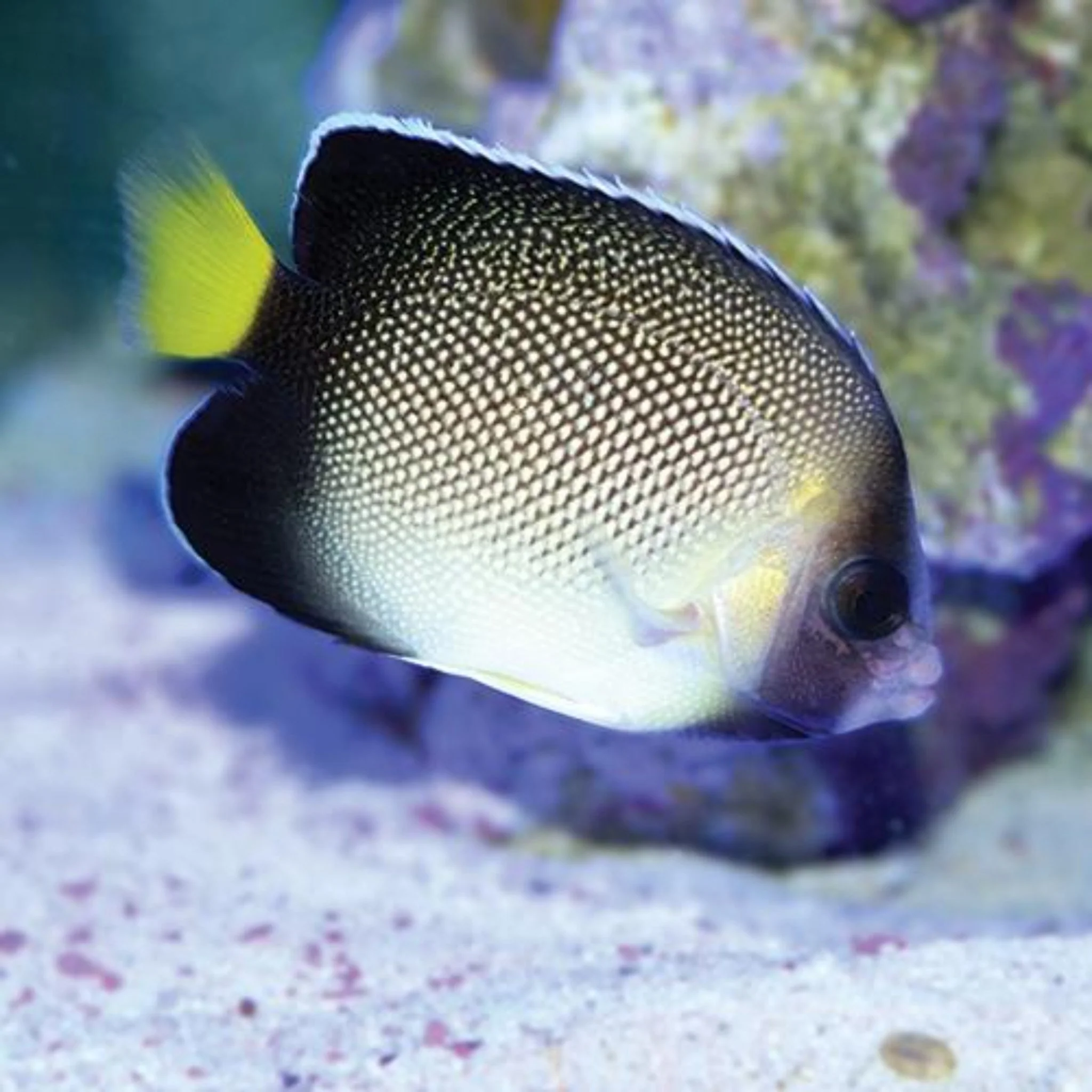
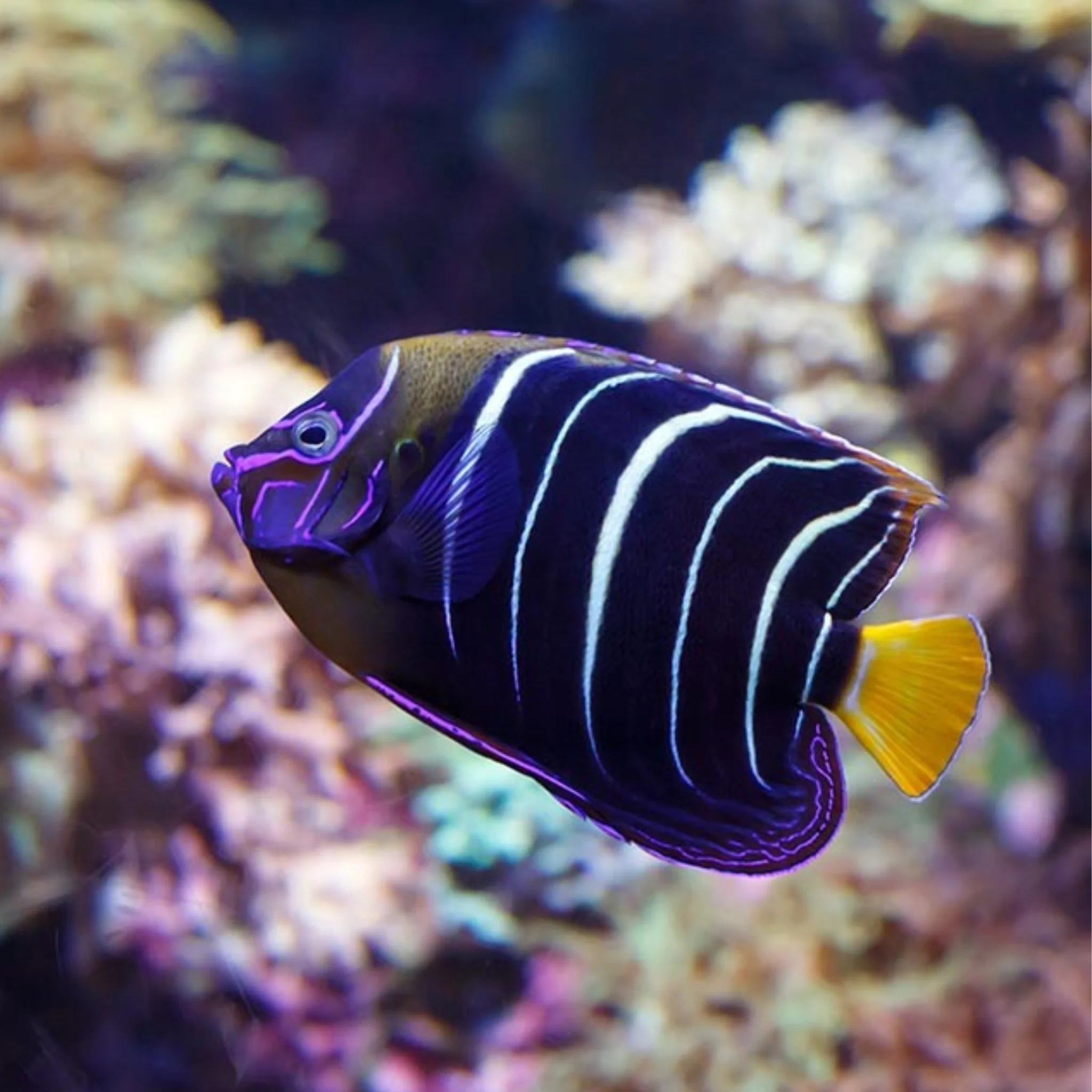
All images are a visual representation of the fish you will receive, made to be as accurate as possible. Please note that Mother Nature is a wonderful thing, and variation in patterns and colours will occur — that is part of the unique beauty of these animals.
Original: $60.54
-65%$60.54
$21.19
Description
Lamarck’s Angelfish (Genicanthus lamarck)
Lamarck’s Angelfish, Genicanthus lamarck, is a graceful and reef-suitable marine angelfish with a pale silver-white body, bold black horizontal striping and elegant swallowtail-style finnage. Also known as the Blackstriped Angelfish or Lamarck Angel, this Indo-West Pacific species belongs to the Genicanthus group of planktivorous angelfish, which are generally safer in reef aquariums than many rock-grazing angel species. Active, attractive and relatively peaceful for an angelfish, it is best suited to larger mature marine aquariums with open swimming space and regular feeding.
Common Name:
Lamarck’s Angelfish, Lamarck Angel, Blackstriped Angelfish, Black-striped Angelfish, Freckletail Lyretail Angelfish.
Scientific Name (Latin):
Genicanthus lamarck
Maximum Size:
Up to around 25 cm in the wild. Aquarium specimens are often smaller, but should still be planned for as a large, active marine angelfish.
Water Type:
Marine
Origin / Natural Habitat:
Indo-West Pacific, from the Indo-Malayan region eastwards to Vanuatu, north to southern Japan and south to the Great Barrier Reef. Naturally found on shallow reef crests, seaward reef slopes and deeper reefs beside steep drop-offs, where it often feeds in midwater above the reef.
Water Parameters:
Temperature: 24–27°C
pH Range: 8.1–8.4
Hardness or Salinity: SG 1.020–1.025
Temperament:
Generally peaceful to semi-assertive. Lamarck’s Angelfish is usually less risky and less territorial than many Pomacanthus or Centropyge angelfish, but it is still an active, confident fish that may dominate very timid tank mates. Males can show aggression towards other Genicanthus males or similar angelfish, especially in smaller aquariums.
Diet:
Planktivorous omnivore. In the wild, it feeds largely on plankton in the water column. In the aquarium, offer a varied diet of frozen mysis, enriched brineshrimp, copepods, finely chopped krill, quality marine pellets, marine flakes and occasional algae or spirulina-based foods. Small regular feeds are best, especially in active reef communities.
Minimum Tank Size:
A minimum of 400 litres is recommended for a single specimen, with larger aquariums preferred for pairs, harems or mixed reef communities. This is an active swimmer and should not be treated as a dwarf angelfish.
Behaviour & Activity:
An open-water, midwater-feeding angelfish that spends much of its time swimming above and around rockwork rather than constantly picking at coral surfaces. In nature, it may form groups or harems with one male and several females. Like other Genicanthus angelfish, it is sexually dimorphic, with males and females differing in pattern and fin details. Provide open swimming space, mature rockwork, caves and strong oxygenation.
Reef Safe:
Reef Safe with Caution
One of the better angelfish choices for reef aquariums because Genicanthus species are primarily planktivores rather than dedicated coral grazers. It is generally safe with corals and most ornamental invertebrates, but no angelfish can be guaranteed completely reef safe. Occasional investigation of fleshy corals, clam mantles or sessile invertebrates is possible, especially if underfed or stressed.
Special Requirements or Care Notes:
Requires a spacious, mature aquarium with excellent water quality, open swimming room and a secure lid. Feed a varied diet several times daily if possible. Avoid mixing multiple males unless the aquarium is very large, and introduce carefully if keeping with other angelfish. Genicanthus angelfish are protogynous hermaphrodites, meaning females can change to males in social groups. Best kept with peaceful to moderately robust tank mates rather than aggressive tangs, triggers or bullying damsels.
Suitable for:
Intermediate fishkeepers
Availability:
Common in trade
All images are a visual representation of the fish you will receive, made to be as accurate as possible. Please note that Mother Nature is a wonderful thing, and variation in patterns and colours will occur — that is part of the unique beauty of these animals.