Copperband Butterfly - Chelmon rostratus
Copperband Butterflyfish (Chelmon rostratus)
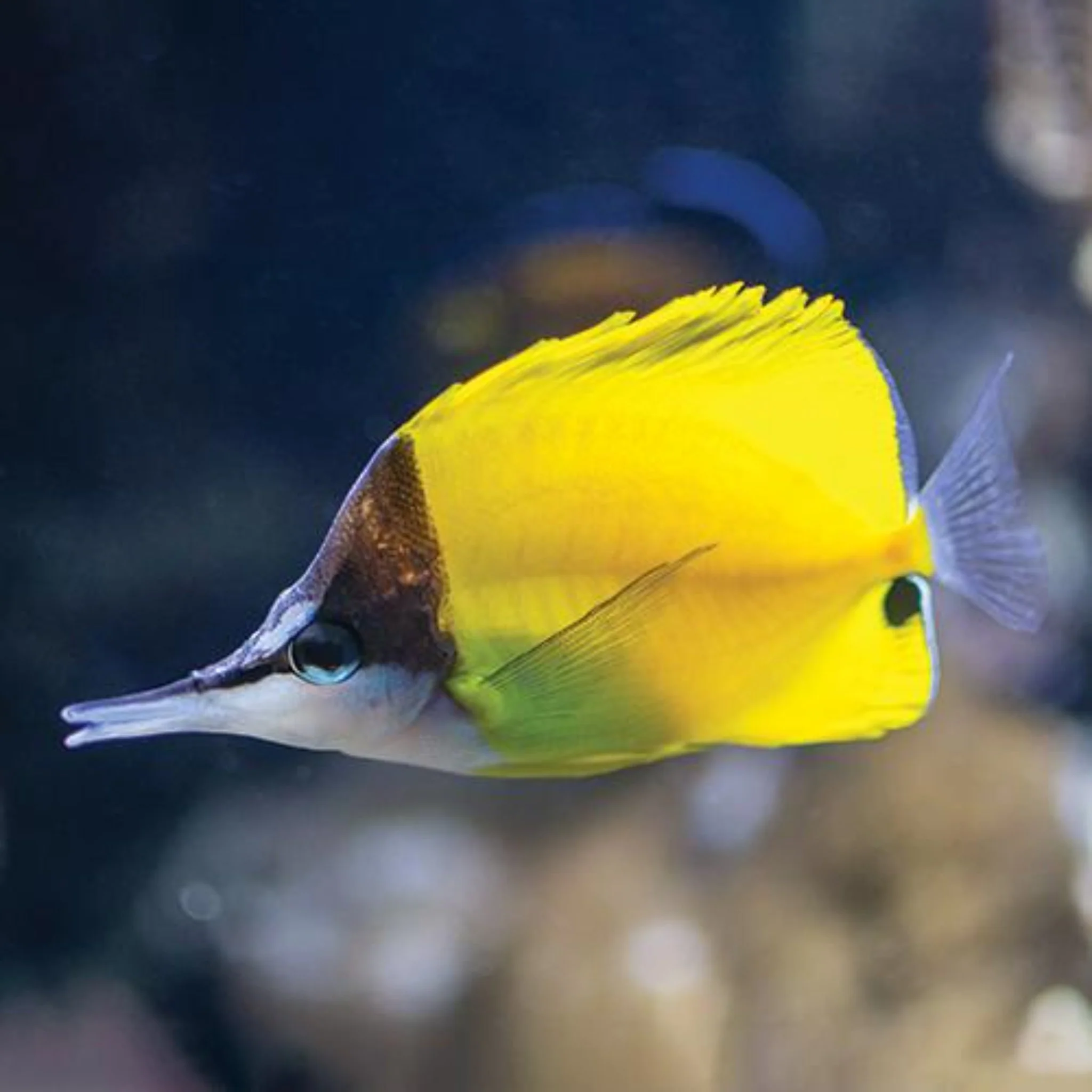
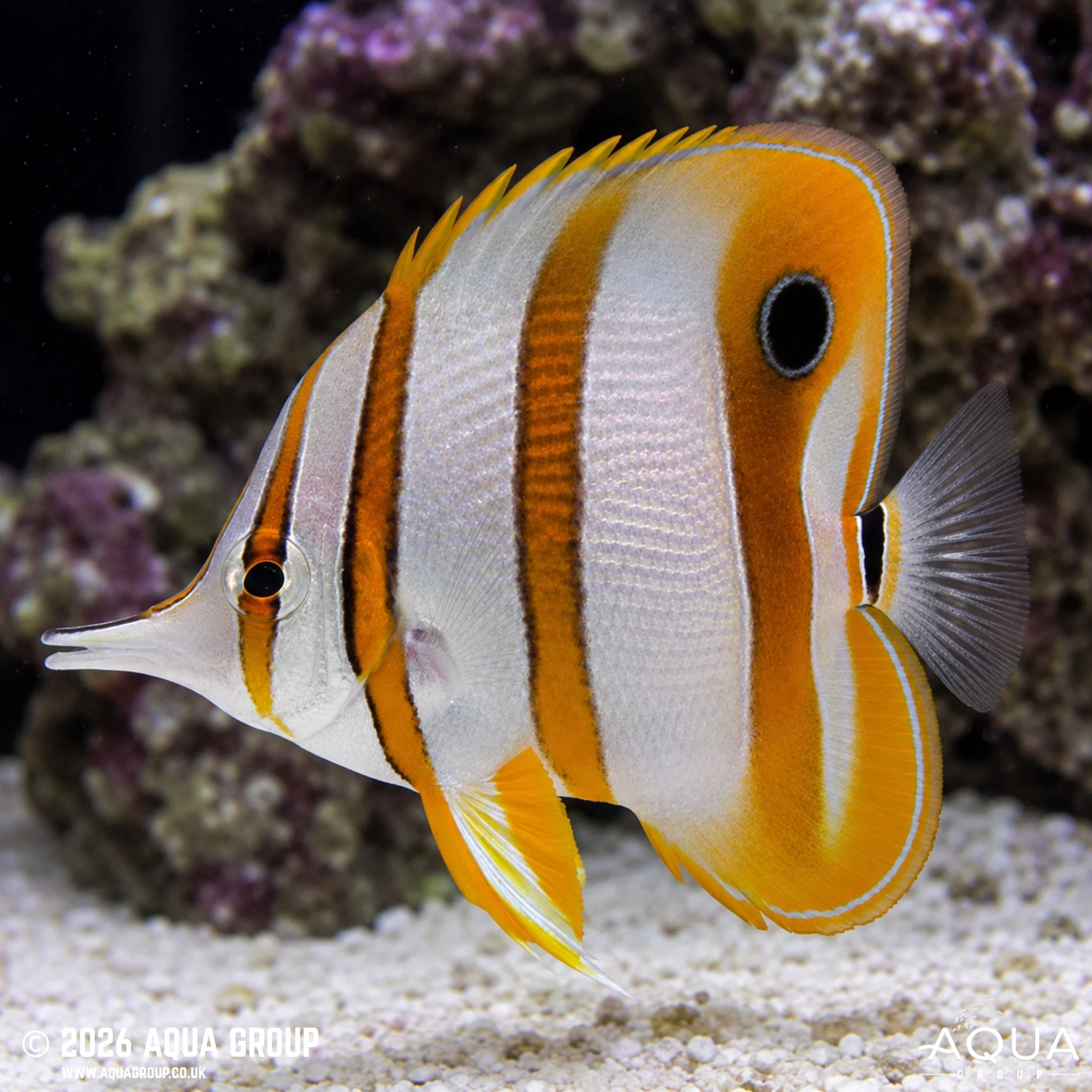
The Copperband Butterflyfish, Chelmon rostratus, is one of the most recognisable marine butterflyfish, prized for its silver-white body, copper-orange vertical bands, tall dorsal profile and long narrow snout. This elegant Indo-Pacific species is often sought after for mature reef and fish-only marine aquariums, where it may help control some pest anemones and small worms. However, it is a specialist, delicate feeder rather than a simple beginner fish, and should only be chosen for stable aquariums where its feeding needs can be met properly.
Common Name:
Copperband Butterflyfish, Copperband Butterfly, Beaked Butterflyfish, Orange Stripe Butterflyfish.
Scientific Name (Latin):
Chelmon rostratus
Maximum Size:
Up to around 20 cm in the wild. Aquarium specimens are often smaller, but should still be planned for as a medium-sized, active butterflyfish.
Water Type:
Marine
Origin / Natural Habitat:
Western Indo-Pacific, from the Andaman Sea through parts of Southeast Asia to southern Japan, Australia and surrounding reef regions. Naturally found around coral reefs, rocky shores, estuaries, silty inner reefs and muddy reef margins, usually in shallow coastal habitats where it searches crevices and substrate for small invertebrate prey.
Water Parameters:
Temperature: 24–27°C
pH Range: 8.1–8.4
Hardness or Salinity: SG 1.020–1.025
Temperament:
Generally peaceful and shy, but can be territorial towards similar-looking butterflyfish or other Chelmon species. It should not be housed with aggressive or very boisterous fish that may outcompete it at feeding time.
Diet:
Specialist carnivore. In nature, the Copperband Butterflyfish feeds on small benthic invertebrates, worms, tiny crustaceans and prey picked from rockwork with its long snout. In the aquarium, offer a varied diet of frozen mysis shrimp, enriched brineshrimp, chopped clam, mussel, cockle, krill, marine worm-based foods and other fine meaty preparations. Many individuals are slow to accept prepared foods, so feeding response should be checked carefully. It may eat Aiptasia, but this should not be relied upon as its sole food source.
Minimum Tank Size:
A minimum of 350 litres is recommended for a single specimen, with larger aquariums preferred. This species does best in a mature, stable system with plenty of live rock, natural grazing opportunities and low competition at feeding time.
Behaviour & Activity:
A graceful, deliberate swimmer that spends much of its time inspecting rockwork, crevices and substrate for food. It is usually seen singly or in pairs in the wild. In aquariums, it may be cautious when first introduced and benefits from peaceful surroundings, established hiding places and calm tank mates. It is not a fast competitive feeder, so careful observation at feeding time is important.
Reef Safe:
Reef Safe with Caution
Often kept in reef aquariums, but not guaranteed with all invertebrates. It may pick at feather duster worms, tube worms, small fan worms, some bivalves, Aiptasia and other small sessile invertebrates. Coral nipping is less common than with many butterflyfish, but individual behaviour varies, especially if the fish is underfed or stressed.
Special Requirements or Care Notes:
This is a specialist marine fish that should only be added to mature, stable aquariums. Choose healthy, feeding specimens and avoid thin individuals with pinched bodies. It requires peaceful tank mates, excellent water quality and regular varied feeding. Do not rely on it solely as an Aiptasia-control fish, as some individuals ignore pest anemones and may instead target desirable worms or other invertebrates. Avoid housing with aggressive feeders, large predatory fish or similar butterflyfish unless the aquarium is very large.
Suitable for:
Experienced fishkeepers
Availability:
Common in trade
All images are a visual representation of the fish you will receive, made to be as accurate as possible. Please note that Mother Nature is a wonderful thing, and variation in patterns and colours will occur — that is part of the unique beauty of these animals.
Description
Copperband Butterflyfish (Chelmon rostratus)
The Copperband Butterflyfish, Chelmon rostratus, is one of the most recognisable marine butterflyfish, prized for its silver-white body, copper-orange vertical bands, tall dorsal profile and long narrow snout. This elegant Indo-Pacific species is often sought after for mature reef and fish-only marine aquariums, where it may help control some pest anemones and small worms. However, it is a specialist, delicate feeder rather than a simple beginner fish, and should only be chosen for stable aquariums where its feeding needs can be met properly.
Common Name:
Copperband Butterflyfish, Copperband Butterfly, Beaked Butterflyfish, Orange Stripe Butterflyfish.
Scientific Name (Latin):
Chelmon rostratus
Maximum Size:
Up to around 20 cm in the wild. Aquarium specimens are often smaller, but should still be planned for as a medium-sized, active butterflyfish.
Water Type:
Marine
Origin / Natural Habitat:
Western Indo-Pacific, from the Andaman Sea through parts of Southeast Asia to southern Japan, Australia and surrounding reef regions. Naturally found around coral reefs, rocky shores, estuaries, silty inner reefs and muddy reef margins, usually in shallow coastal habitats where it searches crevices and substrate for small invertebrate prey.
Water Parameters:
Temperature: 24–27°C
pH Range: 8.1–8.4
Hardness or Salinity: SG 1.020–1.025
Temperament:
Generally peaceful and shy, but can be territorial towards similar-looking butterflyfish or other Chelmon species. It should not be housed with aggressive or very boisterous fish that may outcompete it at feeding time.
Diet:
Specialist carnivore. In nature, the Copperband Butterflyfish feeds on small benthic invertebrates, worms, tiny crustaceans and prey picked from rockwork with its long snout. In the aquarium, offer a varied diet of frozen mysis shrimp, enriched brineshrimp, chopped clam, mussel, cockle, krill, marine worm-based foods and other fine meaty preparations. Many individuals are slow to accept prepared foods, so feeding response should be checked carefully. It may eat Aiptasia, but this should not be relied upon as its sole food source.
Minimum Tank Size:
A minimum of 350 litres is recommended for a single specimen, with larger aquariums preferred. This species does best in a mature, stable system with plenty of live rock, natural grazing opportunities and low competition at feeding time.
Behaviour & Activity:
A graceful, deliberate swimmer that spends much of its time inspecting rockwork, crevices and substrate for food. It is usually seen singly or in pairs in the wild. In aquariums, it may be cautious when first introduced and benefits from peaceful surroundings, established hiding places and calm tank mates. It is not a fast competitive feeder, so careful observation at feeding time is important.
Reef Safe:
Reef Safe with Caution
Often kept in reef aquariums, but not guaranteed with all invertebrates. It may pick at feather duster worms, tube worms, small fan worms, some bivalves, Aiptasia and other small sessile invertebrates. Coral nipping is less common than with many butterflyfish, but individual behaviour varies, especially if the fish is underfed or stressed.
Special Requirements or Care Notes:
This is a specialist marine fish that should only be added to mature, stable aquariums. Choose healthy, feeding specimens and avoid thin individuals with pinched bodies. It requires peaceful tank mates, excellent water quality and regular varied feeding. Do not rely on it solely as an Aiptasia-control fish, as some individuals ignore pest anemones and may instead target desirable worms or other invertebrates. Avoid housing with aggressive feeders, large predatory fish or similar butterflyfish unless the aquarium is very large.
Suitable for:
Experienced fishkeepers
Availability:
Common in trade
All images are a visual representation of the fish you will receive, made to be as accurate as possible. Please note that Mother Nature is a wonderful thing, and variation in patterns and colours will occur — that is part of the unique beauty of these animals.